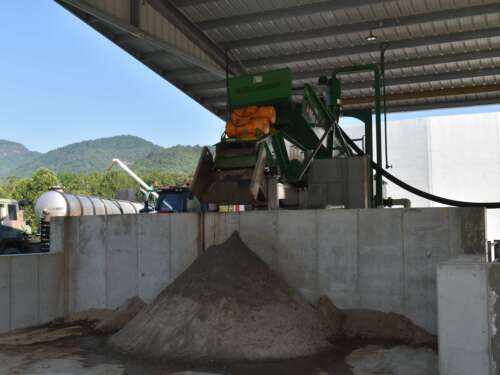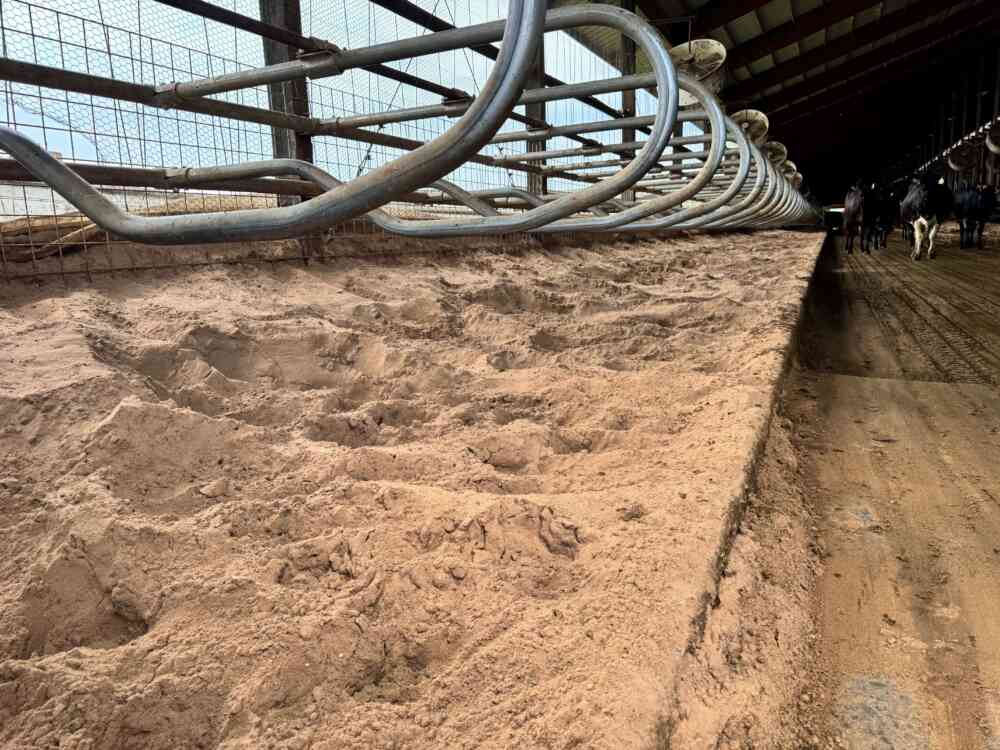
Bedding isn’t just about filling a stall; it’s about cow comfort, udder health and overall performance. Sand is one of the most widely used bedding materials because it’s inorganic, which means lower bacterial growth. It also provides great traction in alleyways, conforms to the cow’s body and can be reclaimed with a sand separation system. But not all sand is created equal. The right type and specification can reduce mastitis risk, improve lying time and prevent headaches in your manure handling or sand separation system.
Common Types of Sand for Dairy Bedding
Mason Sand
Mason sand is fine, soft and has a smooth feel. It provides a high level of cow comfort and packs into a level, supportive surface. However, mason sand can compact over time, and the additional fines may hold onto more moisture, which may require more frequent stall grooming. Mason sand is desirable to use if your manure handling goal is to pump and haul sand-laden manure rather than recover and recycle it.
Concrete Sand
Concrete sand is coarser, with more angular particles. It’s often called ASTM C-33 or 30/50 sand. This sand drains well and has less compaction than finer sands. Concrete sand is also generally easier on manure separation systems than finer sands and sand separation systems will see higher recoveries with an even mix of particle sizes. This sand is the best sand type to use as bedding.
Natural Bank Sand
Unprocessed with variable particle sizes, which may include silt, clay and small stones, natural bank sand is often the most affordable sand. It’s local and plentiful in some regions. However, natural bank sand can be very inconsistent, with higher fines that can plug pumps and organic content that can raise bacterial counts.
Silica Sand
Silica sand has uniform particle size, which is good for cow comfort and stall drainage. It will have high recovery rates with sand separation systems but is more expensive than other sand types.
Key Selection Criteria and What Actually Matters for Cow Comfort
There are a few factors to keep in mind for cow comfort when selecting a bedding sand. These factors include particle size, moisture content, drainage, cleanliness, availability, cost and manure system compatibility.
Particle size should be a consistent gradation that supports the cow without turning soupy or cement-like. The stalls should be able to be raked smooth without crusting or dusting when dry. Your sand type should be a blend that avoids excessive fines while retaining enough midsized particles for comfort and stability. Testing the sand type from the supplier is crucial to determine if the particle size is an appropriate mix.
High moisture combined with excessive fines can equal higher bacterial counts and sticky stalls. Look for a washed sand that drains readily but still “sets” enough to prevent deep holes from repeated lying/standing. Sand cleanliness is important in keeping bacteria count down. If new sand has not been washed and screened prior to delivery, it can contain high amounts of organics and raise somatic cell count.
Availability and transportation are often the largest cost drivers. While sourcing sand nearby might be cost effective and the cheapest option, sand consistency matters. A slightly more expensive, reliable source often beats frequent source changes of nearby sand or risking higher somatic cell count.
Finally, it’s important to factor in manure system compatibility. Ask these questions when evaluating your current or potential new sand type. Do you currently separate sand, either mechanically or with a settling pond or sand lane? Can your pumps handle the particle size and load? Is lagoon volume adequate for any sand carryover? Do you currently use anaerobic digestion or plan to in the future? The answers to these questions will help determine the best sand type for your cows and your dairy.
Common Mistakes to Avoid
Avoid these common mistakes to help maximize the efficiency of your sand bedding. Don’t buy on price alone without verifying the amount of fines and organics in the sand. Too many fines will have low recovery and too many organics can cause issues with somatic cell count. In addition, recheck your sand source every so often. Quarries change and specifications can drift over time.
Make sure to account for your manure handling when selecting your sand type. The best sand can still be a nightmare if your pumps can’t handle it. Stall management is important as well, not grooming stalls enough can decrease cow comfort and increase risk of udder contamination.
Daily stall management is important. Keep the brisket area filled and eliminate dips and ridges during stall grooming. Top off at least two times per week to maintain cow comfort and reduce sand loss.
Bringing It All Together
Choosing the right sand for your dairy cow bedding isn’t just a matter of availability. It’s a decision that impacts cow comfort, udder health, labor efficiency and manure system performance every single day. By focusing on key factors like particle size, cleanliness, drainage and consistency, dairies can support healthier cows and smoother operations. Whether you source washed concrete sand, mason sand or another type, the best choice is the one that fits both your cows’ needs and your farm’s systems. A small investment in evaluating sand quality up front can pay off in better milk quality, fewer equipment issues and long-term savings.