

Water is one of the most valuable resources on any farm, influencing everything from crop performance to manure management efficiency. While dairy farmers often focus on nutrients, feed and equipment, water management plays a critical role in determining how effectively those areas perform. Properly managing water across the dairy can help protect water quality, improve nutrient retention, reduce costs and increase the overall efficiency of the manure management system.
As weather patterns become more unpredictable and environmental stewardship continues to gain importance, understanding the relationship between water management and manure handling is more important than ever.
Why Water Management Matters
Water affects nearly every aspect of agricultural production. In fields, water availability influences nutrient uptake, soil health and yield potential. Too much water can lead to erosion, runoff and nutrient losses, while too little water can limit crop growth and reduce nutrient utilization.
Beyond crop production, water management also impacts livestock facilities and manure systems. Every gallon of water that enters a manure system must be stored, managed and eventually moved. When clean water mixes with manure unnecessarily, it increases storage needs and hauling costs while diluting nutrient concentrations.
Effective water management helps producers maximize nutrient value, improve operational efficiency and reduce environmental risk.
The Connection Between Water Quality and Manure Systems
Manure contains valuable nutrients that support crop growth, but when nutrients leave the farm through runoff or leaching, they become both an economic loss and a water quality concern.
Poor water management can increase the movement of nitrogen, phosphorus, organic matter and other contaminants into nearby waterways. Heavy rainfall events, improper drainage and poorly managed runoff can all contribute to nutrient losses from fields and livestock facilities.
Because of this connection, successful manure management goes beyond storage and application practices. It requires a clear understanding of how water enters, moves through and exits the operation. Farms that proactively manage water pathways are often better positioned to protect both nutrient value and environmental resources.
How Excess Water Impacts Manure Storage and Handling
One of the most common challenges in manure management is excess water entering storage systems. Rainfall, roof runoff and surface drainage can quickly add significant volumes of water to manure storages, lagoons and holding structures.
This additional water creates several challenges:
- Increased storage requirements
- Higher pumping and hauling costs
- Diluted nutrient concentrations
- Greater overflow risk during wet periods
- Increased wear on pumps and agitation equipment
When manure becomes diluted, dairy farmers often spend more time and money handling the same amount of nutrients. In many cases, the operation is essentially transporting water rather than nutrients.
Preventing clean water from entering manure storage is one of the simplest and most cost-effective ways to improve manure management efficiency.
How Rotary Drum Separators Support Water Management
In addition to controlling runoff and diversion, many farms are incorporating liquid-solid separation technologies to improve water and manure management.
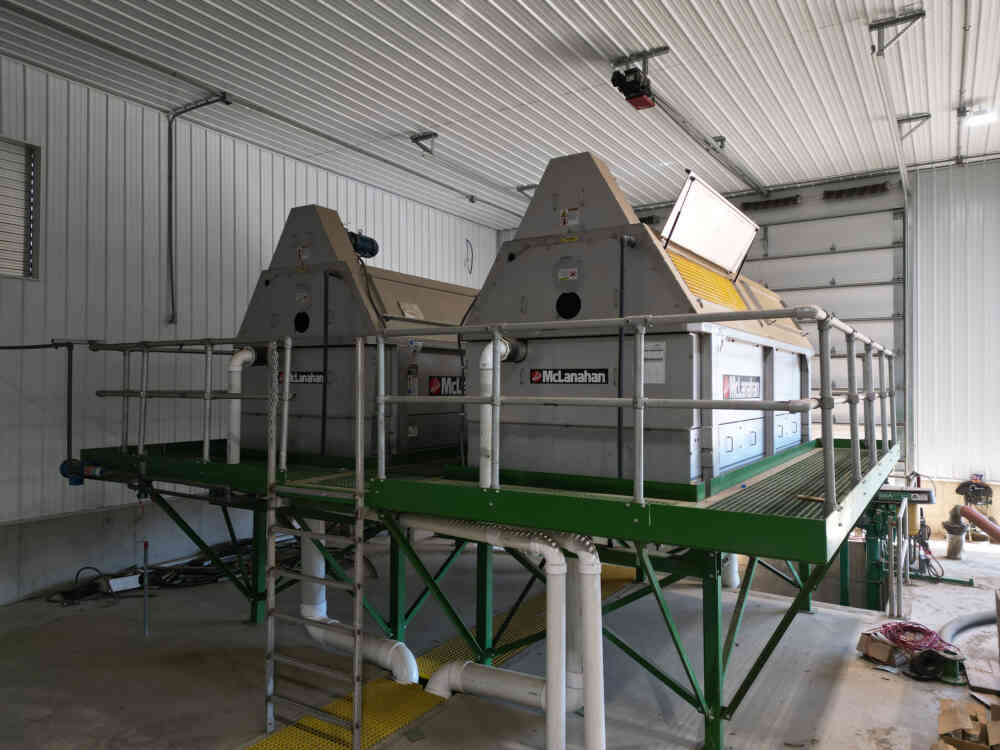
A Rotary Drum Separator mechanically removes solids from manure streams by using a rotating screening drum. As manure passes through the system, larger solids are captured while the liquid fraction continues downstream for storage or further treatment.
This process offers several benefits from a water management perspective.
First, separating solids creates a more manageable liquid stream. Lower solids content can improve pumping performance, reduce clogging issues and simplify manure handling throughout the system.
Second, liquid-solid separation helps maximize storage efficiency. Removing solids before storage can reduce sediment accumulation and preserve valuable storage capacity over time.
For dairies that bed with sand, water management also plays an important role in sand recovery systems. Sand separation systems rely on proper water flow and settling conditions to effectively separate sand from manure streams. Excess water entering the system can dilute solids concentrations and impact separation efficiency, while insufficient water may limit the ability of sand to settle and move through the recovery process. Maintaining consistent water volumes and flow rates helps improve sand recovery, reduces wear on equipment and supports the reuse of valuable bedding material.
Third, nutrient management becomes more flexible. Many nutrients, particularly phosphorus, are concentrated within the separated solids. By creating distinct liquid and solid nutrient streams, producers gain more options for transportation, land application, composting or bedding reuse, depending on their needs.
Rather than simply being a manure processing tool, a Rotary Drum separator can serve as an important component of an overall water management strategy, helping farms improve efficiency while making better use of available nutrients.
Managing Runoff to Protect Nutrients and Water Quality
Runoff is one of the primary ways nutrients leave fields. During heavy rainfall or snowmelt events, water can carry sediment, phosphorus, nitrogen and organic matter away from fields and into nearby waterways.
Protecting water quality begins with keeping nutrients where crops can use them.
Several practices can help reduce runoff risks:
- Maintaining vegetative buffer strips
- Using grassed waterways
- Improving drainage management
- Following nutrient management plans
- Timing manure applications appropriately
- Avoiding applications ahead of major weather events
Application timing is particularly important. Even well-managed manure applications can experience nutrient losses when applied under unfavorable conditions. Monitoring weather forecasts and field conditions can help producers improve nutrient retention and reduce environmental risk.
Best Practices for Managing Water Around Manure Systems
Successful water management combines infrastructure, planning and ongoing maintenance. Several practical steps can make a significant difference.
1. Divert Clean Water
Roof runoff, surface drainage and uncontaminated stormwater should be directed away from manure storage areas whenever possible. Maintaining gutters, downspouts and diversion systems helps prevent unnecessary water from entering manure facilities.
2. Maintain Proper Site Drainage
Facility grading should promote positive drainage and minimize standing water around livestock buildings, feed storage areas and manure structures.
3. Inspect and Maintain Storage Structures
Regular inspections help identify potential issues before they become major problems. Ensuring adequate storage capacity is especially important in regions that experience seasonal rainfall fluctuations or extended winters.
4. Incorporate Separation Technology
Equipment such as Rotary Drum Separators or Slope Screens can improve water and manure management by reducing solids, improving handling characteristics and creating opportunities for more targeted nutrient management.
5. Optimize Sand Separation Systems
For dairies using sand bedding, effective water management is essential to maximizing sand recovery. Sand lanes, settling basins and mechanical sand separation systems depend on controlled water movement to separate heavier sand particles from manure solids and liquids. Excess runoff entering these systems can disrupt settling performance and increase the volume of material that must be handled. Regular maintenance, proper water flow management and routine cleanouts can help ensure efficient sand recovery while reducing equipment wear and bedding costs.
6. Follow a Nutrient Management Plan
Applying manure according to crop needs and field conditions helps maximize nutrient utilization while reducing losses to the environment.
The Economic Benefits of Better Water Management
Improved water management is not just an environmental practice. It is also a business decision.
Reduced runoff and improved storage efficiency can lower operational costs while supporting long-term soil productivity.
For farms utilizing technologies like Rotary Drum Separators, additional benefits may include:
- Reduced storage cleanout frequency
- Lower transportation costs
- Improved manure application efficiency
- Better nutrient distribution options
- Less abrasive wear on pumps, separators and manure handling equipment
- Increased sand recovery and bedding reuse opportunities
- Reduced sand purchasing costs
Over time, these improvements can contribute to both operational savings and sustainability goals.
Water management and manure management are closely connected. From controlling runoff and protecting water quality to improving storage efficiency and nutrient utilization, the way water moves through a dairy farm has a direct impact on farm performance.
By implementing water management practices and leveraging technologies such as Rotary Drum Separators, Slope Screens, and Sand Separation Systems, dairy farmers can reduce costs, improve nutrient management, recover valuable bedding resources, and create more resilient manure management systems. Ultimately, managing water effectively means keeping clean water clean, keeping nutrients where they belong, maximizing the value of recovered materials, and ensuring the long-term success of the dairy.
