

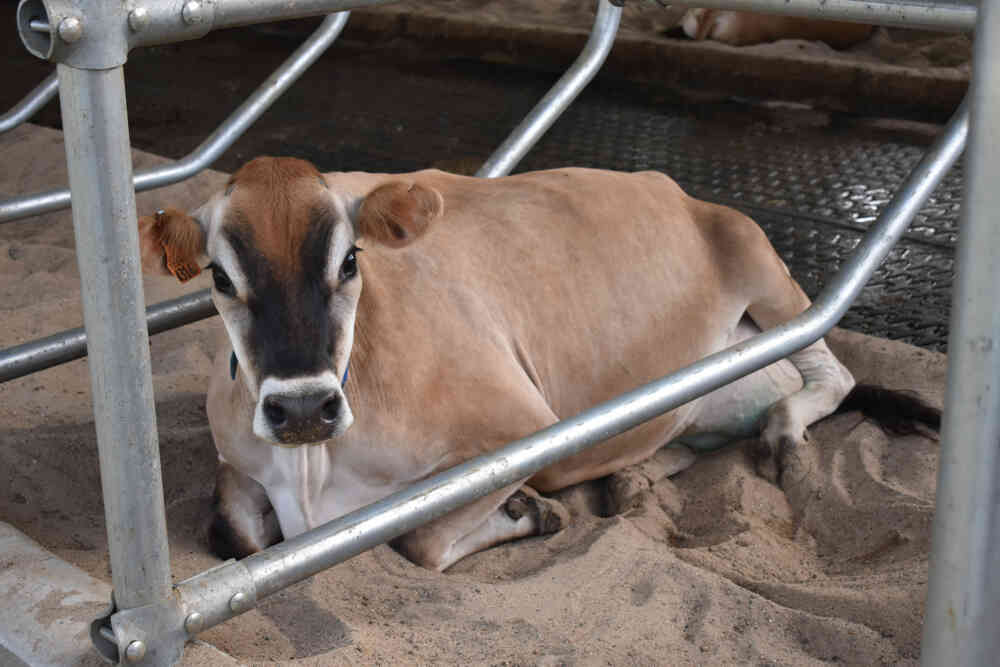
Ideally, dairy cows spend 14 hours or more a day resting, and bedding plays a significant role in making that rest count. Research shows for every extra hour of lying time beyond 10 hours, cows can produce up to 3.5 more pounds of milk per day. The right material can support comfort, health and consistent performance, not to mention make daily management more efficient.
Sand and composted solids are the two most popular picks thanks to the comfort they offer. Other types of bedding include straw, waterbeds, mattresses, paper or a mix of materials.
Advantages of Sand Bedding
An excellent quality sand will maximize cow health and cow comfort. Sand is inorganic, which means it inhibits bacterial growth and can result in lower cases of mastitis while also reducing somatic cell count. Sand provides a cool surface for cows to rest during hot summer days and adds traction to slippery surfaces. A quality sand also provides a comfortable place for cows to lie down, cushioning the cow and reducing hock lesions. Depending on the sand quality and type, sand is also recyclable and can be reused.
Disadvantages of Sand Bedding
Depending on farm location, local sand availability may be limited or include significant hauling costs. Sand can be abrasive on equipment and if not regularly recycled, the sand will need to be replaced, which can be costly yearly expense. Sand that is not recycled can build up in lagoons, storage ponds, resulting in costly annual cleanouts. Sand kept in the manure stream and spread over fields can change soil composition over time, which can affect crop production.
Choosing a Sand Type
With a variety of sand types available, choosing the right sand will depend on a variety factors, including particle sizes, cost, sand origin, logistics and hauling, cow comfort, and the farm’s long-term goals. If recovering and reusing sand is a major goal, that should be included in the list of factors when choosing the best sand. Sand is available in a range of particle sizes for a variety of different uses, so it might seem like there are a lot of choices. However, each sand type comes with different benefits, challenges, costs and recovery potential.
Additionally, given the rising cost of transportation, most dairy farms are interested in nearby sand sources; however, it’s important to keep in mind that local sand may contain undesirable levels of too-fine or too-coarse particles, decreasing cow comfort and recovery efforts. Even after purchasing sand from a reliable source, it’s important to periodically test your sand to ensure the quality has not changed.
Clay or Bank Sand
Bank sand is fine-textured. It generally contains a significant percentage of clay and silt along with a percentage of sand. The disproportionate percentage of clay and silt in bank sand can create unwanted packing in stalls and additional moisture, resulting in lower cow comfort and recovery potential. Bank sand is lower in cost and readily available, often excavated from the local area near the farm, but may contain larger pebbles, rocks or organic material that can harm the cows.
Mason Sand
Mason sand is finer than concrete, bank and silica sand and is the most desirable sand type to use if your manure handling goal is to pump and haul sand-laden manure rather than recover and recycle it.
Silica Sand
Also known as quartz sand or industrial sand, silica sand is light colored and has uniform gradation. It will not pack in the stall and will keep bacteria growth low. If looking to recycle and reuse, this sand has high recovery potential but will be more expensive than other sand types.
Concrete Sand
Often characterized as ASTM C-33, concrete sand is the best sand type for bedding sand because it contains the right mix of small and large particles. It doesn’t contain an excess of coarse particles that can harm the cow, and it contains minimal fine particles that can cause the stalls to pack and become uncomfortable and dirty. The consistent range in particle sizes allows for a high-quality bedding material that is cushioning and able to wick moisture away from the cow, keeping stalls dry and comfortable while limiting bacteria exposure.
Concrete sand also offers high sand recovery in sand separation systems, which equates to less money spent on buying new sand. It also means less sand that can fill up lagoons, storage ponds or spread on fields.
Concrete sand is readily available around the world, so it’s not difficult to find a source for bedding. Depending on the location, concrete sand may also be called “construction sand”, “bedding sand”, “river sand” or “torpedo sand”.
Conclusion
Sand is widely regarded as the best bedding for dairy cows. It provides a clean, dry and comfortable place for cows to lie down. Sand is also an inorganic material and doesn’t support the growth of bacteria. While sand is the gold standard for dairy cow bedding, not all sand is created equal. By using quality sand such as concrete sand, dairy producers can maximize cow health and cow comfort.

