

It’s not just about what cows drink. Water management also isn’t only about what goes into the system, it’s also about what comes out. Water touches every part of a dairy operation, from drinking water to manure handling to bedding. Poor water management doesn’t just affect cows; it impacts sand separation, manure storage and overall operational efficiency. Water entering the manure system must ultimately be managed downstream, making it critical to use and handle it efficiently from the start.
The Link Between Water & Manure Volume
High-producing cows consume large volumes of water, resulting in significant manure and liquid output. According to the Dairyland Initiative, lactating dairy cows on average produce about 150 pounds, or roughly 18 gallons, of manure per day or more.
Dilution levels directly impact:
- Pumping efficiency
- Manure storage capacity, including tanks or lagoons
- Solid-liquid separation performance
Excess water doesn’t just move through the system, it increases storage requirements, reduces separation efficiency, and can add cost at multiple points in the operation. The way water is managed upstream will ultimately show up downstream in the performance of the manure system.
Water’s Role in Sand Separation
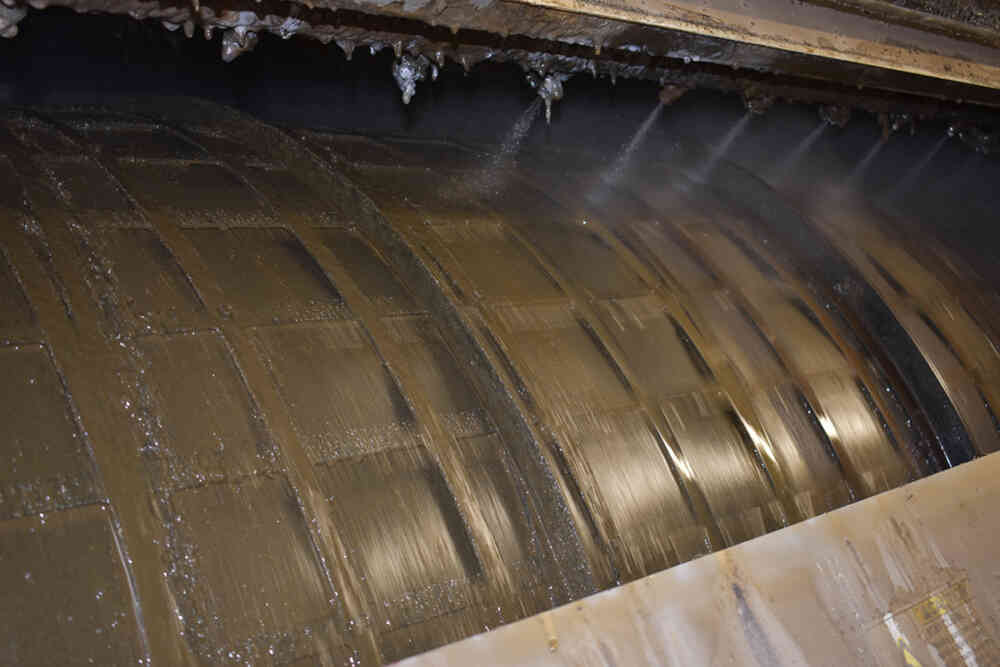
Fresh water plays a key role in making sand recovery systems work effectively. Sand-laden manure relies on proper water flow for efficient separation. Fresh water is commonly used during the separation process to rinse recovered sand, as well as to clean screens and support clean-in-place systems on rotary drums.
Fresh water usage rates will vary depending on system design and management but have an approximate usage rate of three to five gallons per minute.
Water management challenges that affect separation performance include:
- Excess dilution, which makes it more difficult for sand to settle efficiently
- Inconsistent flow rates, which can reduce separation performance
- Poor balance between recycled and fresh water usage, affecting final sand cleanliness
Recycled water plays an important role in separation, but clean water is still necessary to provide a final rinse before dewatering. When that balance is off, it can impact:
- Sand recovery rates
- Equipment wear and maintenance costs
- Bedding quality, particularly the cleanliness of recycled sand
If bedding quality declines, stall comfort can suffer, and with it, overall cow performance.
Looping Back to the Barn
Recycled water remains a key component of many dairy systems. Operations often reuse parlor water for flushing alleys and supporting sand separation systems. In these systems, recycled water helps dilute sand-laden manure and reduces the need for larger fresh water inputs.
In a closed-loop system, this water originates from all water entering the manure stream, including parlor wash water. Flow rates can vary significantly, roughly 80 to 500 gallons per minute, depending on herd size, system design and operational efficiency. Wide ranges like this often reflect differences in system optimization and water management strategies.
Water, however, doesn’t stop at separation, it continues cycling through the system and often makes its way back into the barn environment. Variability in recycled water quality can introduce inconsistencies in separation performance, increase wear on pumps and equipment, and contribute to odor or hygiene challenges in animal housing areas.
The Foundation of Production Still Matters
While manure systems and sand separation are critical, drinking water remains the foundation of production. Water intake drives milk production, feed intake and rumen function.
It’s essential to provide clean, accessible water, which comes down to barn design, waterer placement and overall cow comfort. Even small reductions in water intake can lead to measurable drops in milk production and feed efficiency.
Importantly, changes in water intake don’t just impact production, they also affect manure volume and consistency, which in turn influences how well manure separation systems perform.
Everything is Connected
Everything in a dairy system is connected and water sits at the center of it all. The quality and accessibility of drinking water directly influence intake, which drives both milk production and manure output. From there, manure consistency plays a critical role in how effectively solids and liquids can be separated.
When separation performs well, sand recovery improves and system costs are easier to control. When it doesn’t, inefficiencies begin to build - from increased wear on equipment to reduced bedding quality and higher operational costs. Ultimately, system performance feeds back into the barn, influencing cleanliness, cow comfort and overall productivity.
Small inefficiencies at any step, whether in water access, manure handling, or separation, don’t stay isolated. They compound across the system, leading to greater impacts on performance, cost and cow well-being.
Practical On-Farm Improvements
In the barn:
- Clean and maintain waterers regularly
- Ensure adequate access and proper flow rates
In the manure system:
- Monitor dilution levels
- Optimize flow consistency to separation equipment
- Maintain pumps and separators to prevent inefficiencies
In sand management:
- Track sand recovery rates
- Evaluate the quality of recycled sand
Across the system:
- Test water quality (both fresh and recycled)
- Identify bottlenecks or inconsistencies
- Install a water meter in the main supply line or use individual flow meters to better understand total water use
Water Management Is Whole-System Management
Water management isn’t just one piece of the operation, it’s a reflection of how the entire system works together. While it may appear as separate components—from the barn to the lagoon to the sand lane, these systems are closely interconnected.
When water is managed well, the benefits carry through every stage: manure systems operate more efficiently, sand recovery improves, and the overall environment supports healthier cows and stronger production. When it’s not, those inefficiencies show up across the entire operation.
In the end, it’s a simple equation: manage water well, and the rest of the system performs with it.