Poeppelman Materials Sees Increased Production and Reduced Waste With McLanahan UltraFINES Recovery Plant
Case Studies
Poeppelman Materials is a fifth-generation building materials producer, including crushed limestone, natural gravel, ready mix concrete and precast products. The company has operated its Bradford quarry since the 1960s, continuing a long legacy of involvement in the aggregate industry that spans decades prior. In addition to the quarry, Poeppelman Materials owns and operates four additional ready mix plants and a precast facility with locations in Ohio and Indiana.
Challenge
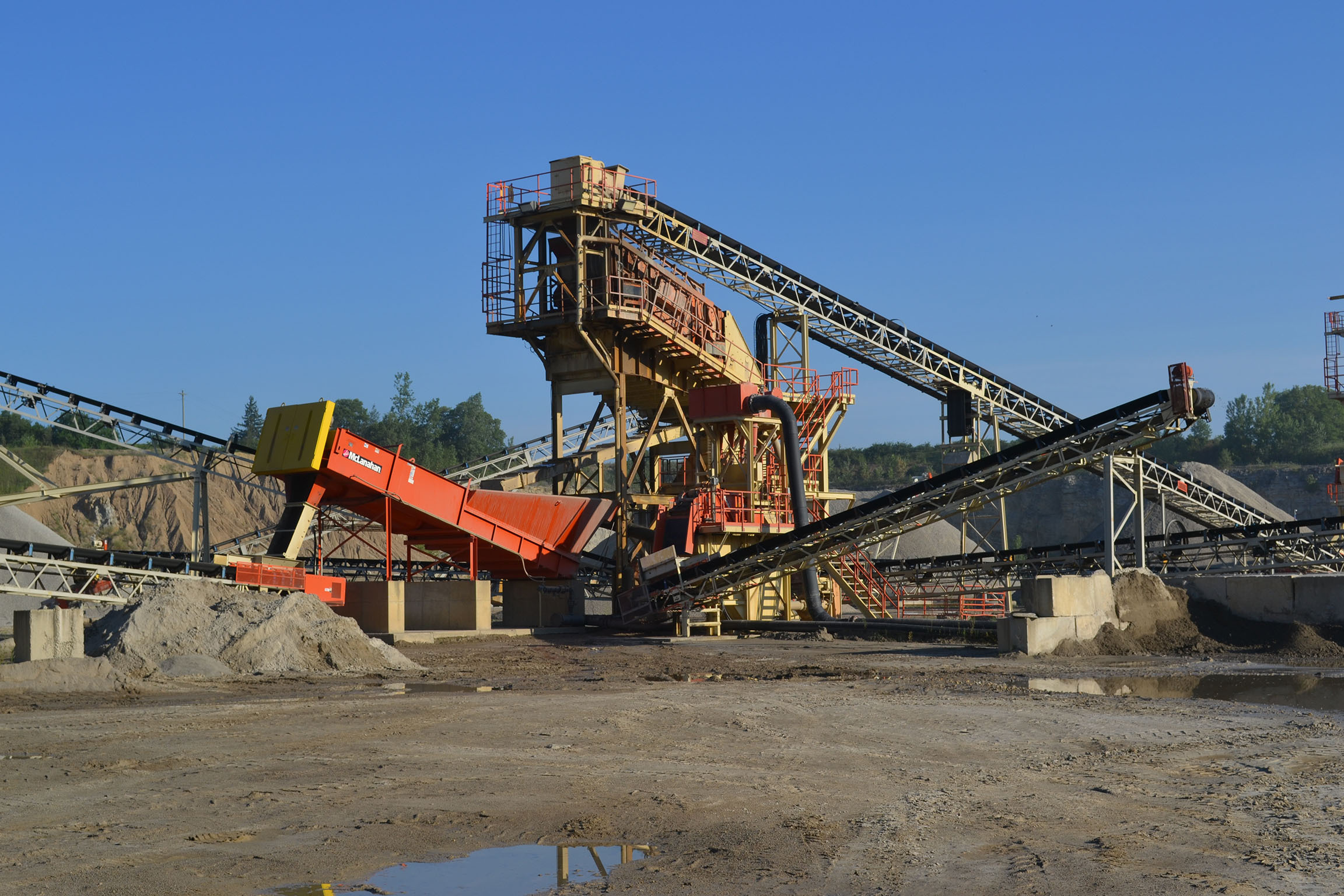
The Bradford quarry contains a natural sand and gravel seam above the limestone deposit, resulting in both materials being present in the pit. For years, the site relied on a single sand screw positioned on the hill, requiring haul trucks to move limestone up to the primary plant for processing. This setup limited efficiency and prevented the operation from processing natural sand in the same plant.
Without a fines recovery system, large volumes of fine material generated during limestone processing were lost to a settling pond. The team had to clean out the pond nearly every week, and most of the recovered fines were ultimately buried as waste. The plant’s configuration also restricted their ability to process natural sand, despite the seam being approximately 80% sand.
Solution
Working with Process Machinery, Inc., a McLanahan dealer, Poeppelman Materials began designing a new plant layout. Initially, the plan did not include a fines recovery system, but the team reconsidered at the last minute. Rather than continue burying valuable fines, they wanted a plant capable of capturing and processing those materials into a sellable product.
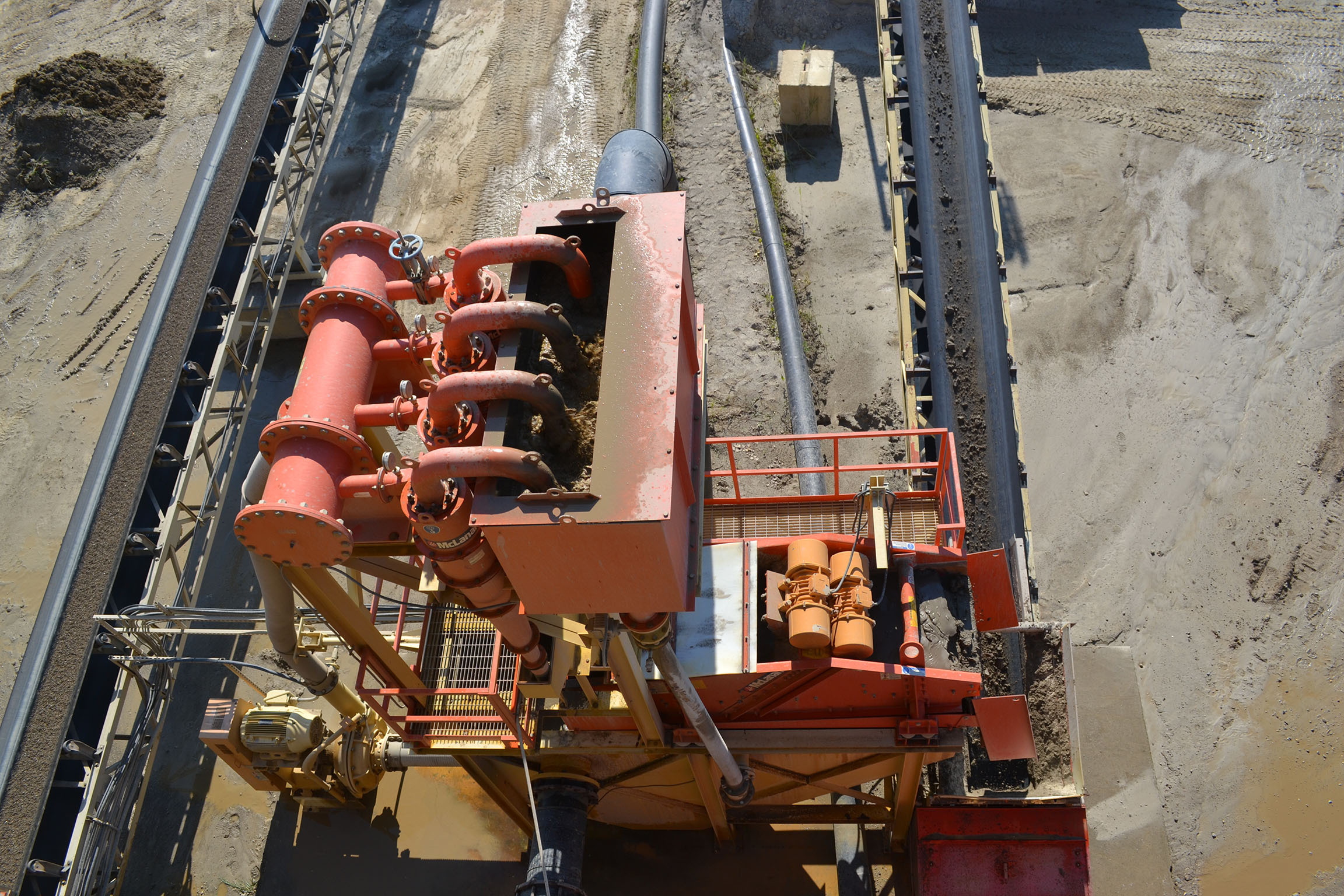
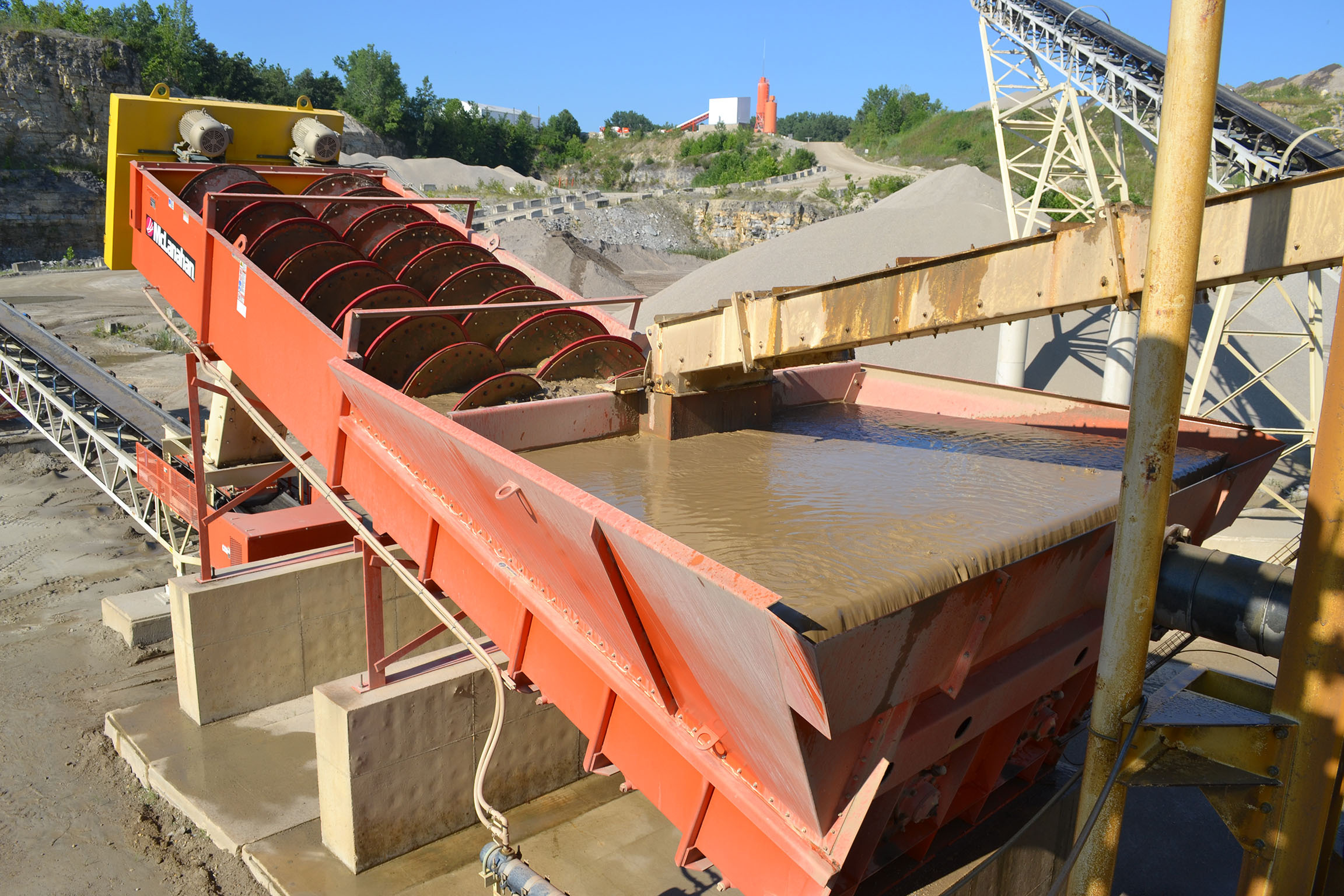
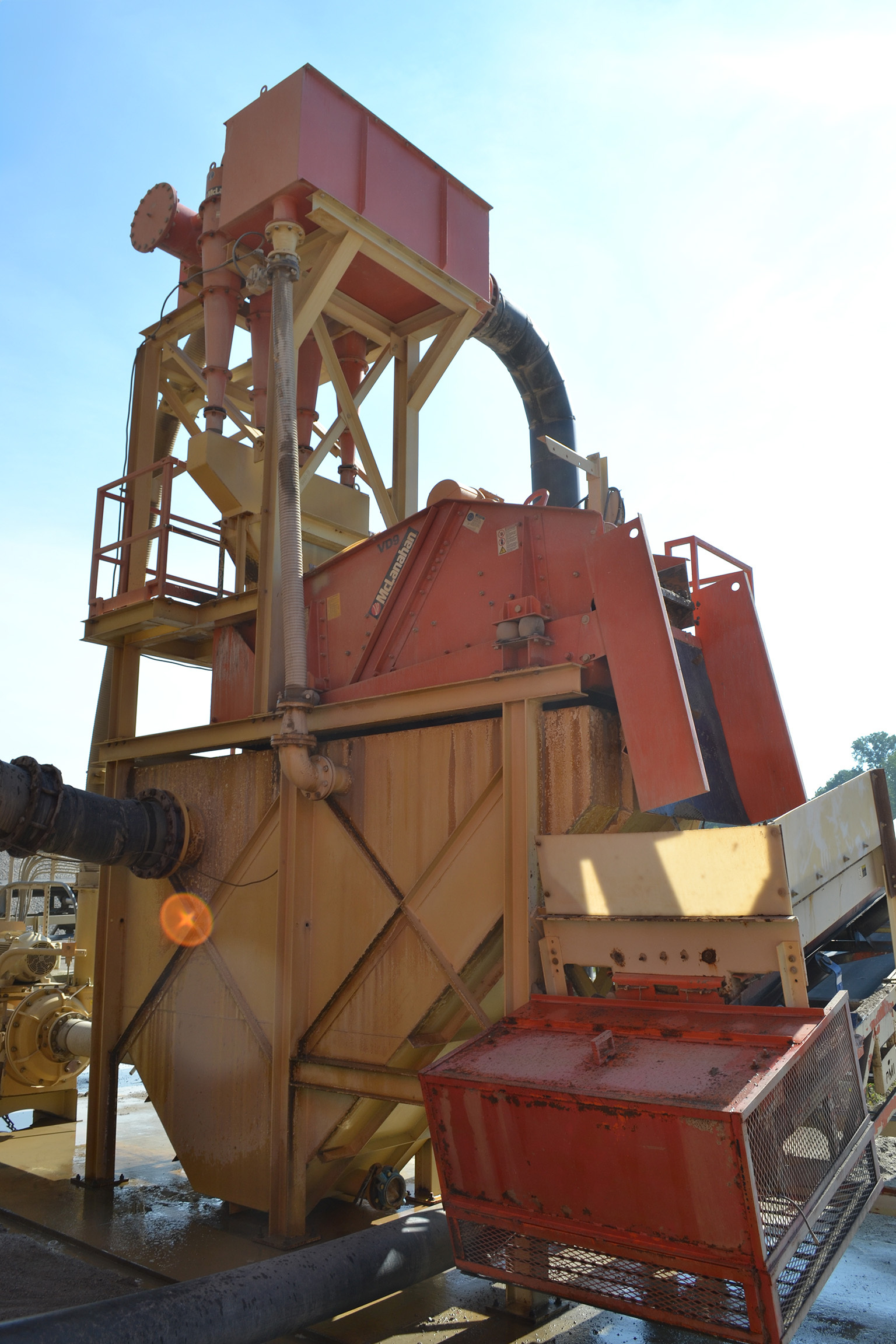
Process Machinery, Inc. recommended incorporating a McLanahan UltraFINES Recovery (UFR) System paired with a McLanahan Fine Material Screw Washer.
The UltraFINES Recovery unit immediately changed how the site managed fines. Instead of sending them to the settling pond, the system captures and dewaters fines, converting what was once waste into a profitable product. Limestone fines recovered through the UltraFINES Recovery plant are now sold as ag lime for agricultural nutrient applications. Natural fines from the plant come off the dewatering screen drip-free and require only brief stockpiling before being blended into a backfill product.
Though the Fine Material Screw Washer is slightly oversized for limestone, it provides ample capacity for the high-sand natural deposit. The team can switch between limestone and natural sand in under 10 minutes by adjusting gates and redirecting flow.
Results
The impact of the McLanahan equipment was immediate.
“The old plant produced around 200,000-250,000 tons a year and now we're producing between 600,000-650,000 tons a year,” said Ryan Corbly, Aggregate Operations Manager for Poeppelman Materials.
The increase in production with the UltraFINES Recovery Plant and Fine Material Screw Washer more than doubles output. The quarry now produces more sand annually than ever before, and fines that once required weekly pond cleanouts have become a profitable product.
The ability to process the natural product has allowed them to produce sand that is used in their four ready mix concrete and precast facilities, making them completely self-sufficient on sand.
“At the eleventh hour, we decided to throw the UFR in there, and we’re so glad we did because it’s been a truly great piece of equipment for us,” said Corbly.
Waste handling also improved significantly. Slurry now gravity-feeds through a pipe into a trench system with weirs that settle remaining fines before water enters the fresh water pond. The trench, approximately 14’ (4.3 m) wide, can be easily cleaned with an excavator, and the clarified water is reused in the wash plant.
“The UFR recovers a lot of fines that would go to the settling pond. It pulls it out and makes it a sellable product instead of a waste material,” Corbly said. “In the years past, we had so much waste material to get rid of and find a place to bury it. Now we can sell it as a usable material.”
Maintenance has been minimal. Routine greasing and cleaning keep the system running smoothly. The Poeppelman team credits the reliability of the system to McLanahan’s design and their own commitment to preventative maintenance. Their relationship with McLanahan continues through Process Machinery, Inc., but the equipment has largely been turn on and go, requiring little outside support.
“As long as you take care of the equipment, it lasts and hasn’t caused any issues for us at all,” said Corbly.