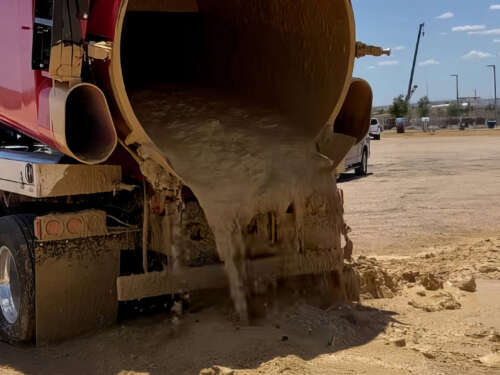
Hydrovac excavation has become the preferred method for safe, non‑destructive digging across construction, utility and municipal projects. But with hydrovac excavation comes the challenge with how to deal with hydrovac slurry. This mixture of soil, water, clay, sand, gravel and organic debris must be handled properly to meet environmental regulations and avoid high disposal costs.
As landfill restrictions tighten and tipping fees rise, contractors are searching for more efficient and sustainable ways to dispose of hydrovac waste.
There are three essential steps to hydrovac waste recycling: separation, dewatering and tailings management. Understanding these steps can dramatically reduce costs and environmental impact.
Step 1: Slurry Separation
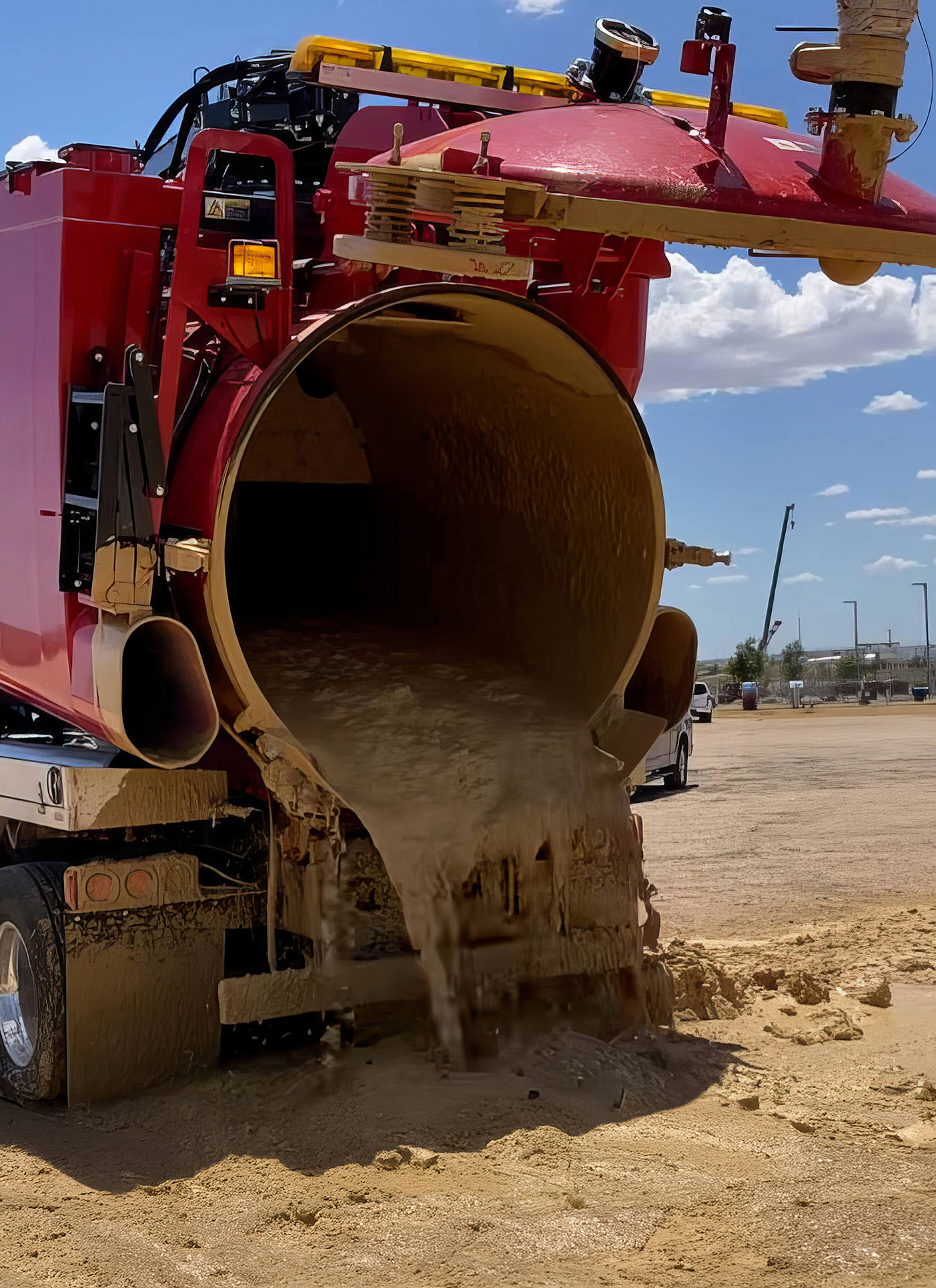
Effective hydrovac waste disposal begins with slurry separation, the process of removing solids from the liquid portion of the waste stream. This step makes every downstream process more efficient.
Separation typically begins with equipment designed to remove oversized material and prepare the slurry for downstream processing. In many hydrovac recycling applications, a Trommel Screen is used because it can handle large surge loads of unrestricted water that a dewatering screen cannot. The trommel's larger surface area and wire mesh construction provide more open area than the polyurethane deck of a dewatering screen, allowing it to process higher water volumes more effectively.
A trommel is also better suited to handling the large rocks commonly found in hydrovac slurries. Its heavy-duty construction allows it to process larger, more abrasive material than equipment designed primarily for dewatering. As material moves through the rotating drum, a tumbling action creates light attrition in the presence of spray water. This helps clean coarse material more effectively by removing clays that would otherwise cling to larger rocks, resulting in a cleaner final product.
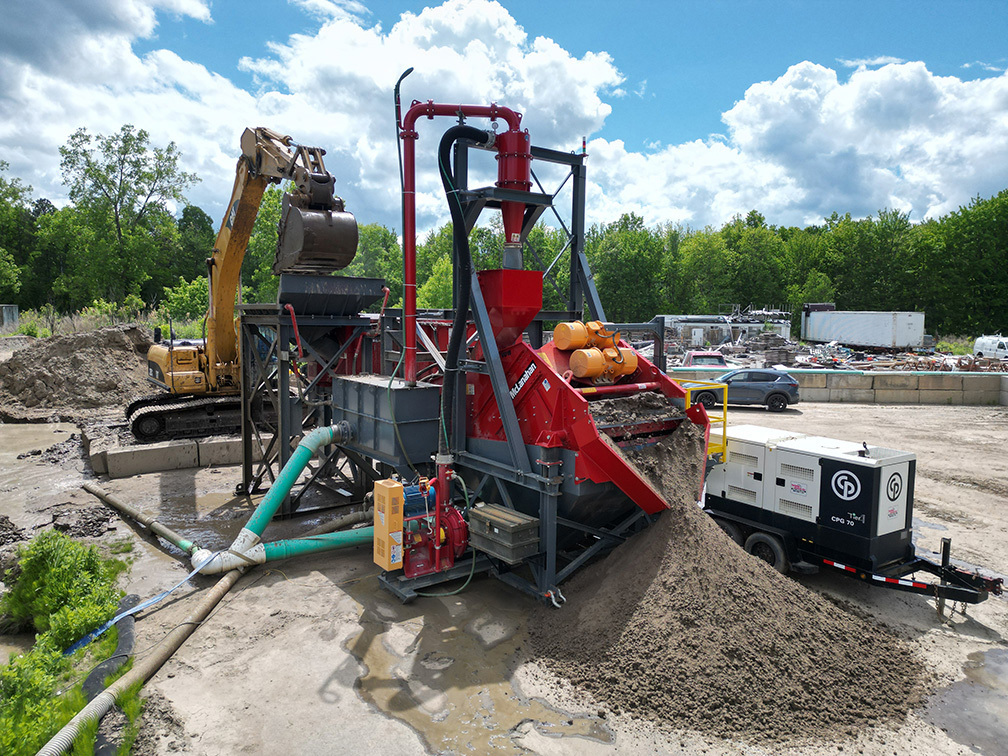
Once the coarse material is separated from sand sized particles, the slurry moves into a sand processing system. McLanahan’s Separators™ are commonly used to produce cleaner water and a more concentrated solids stream. Fine Material Screw Washers can also be used.
Step 2: Dewatering
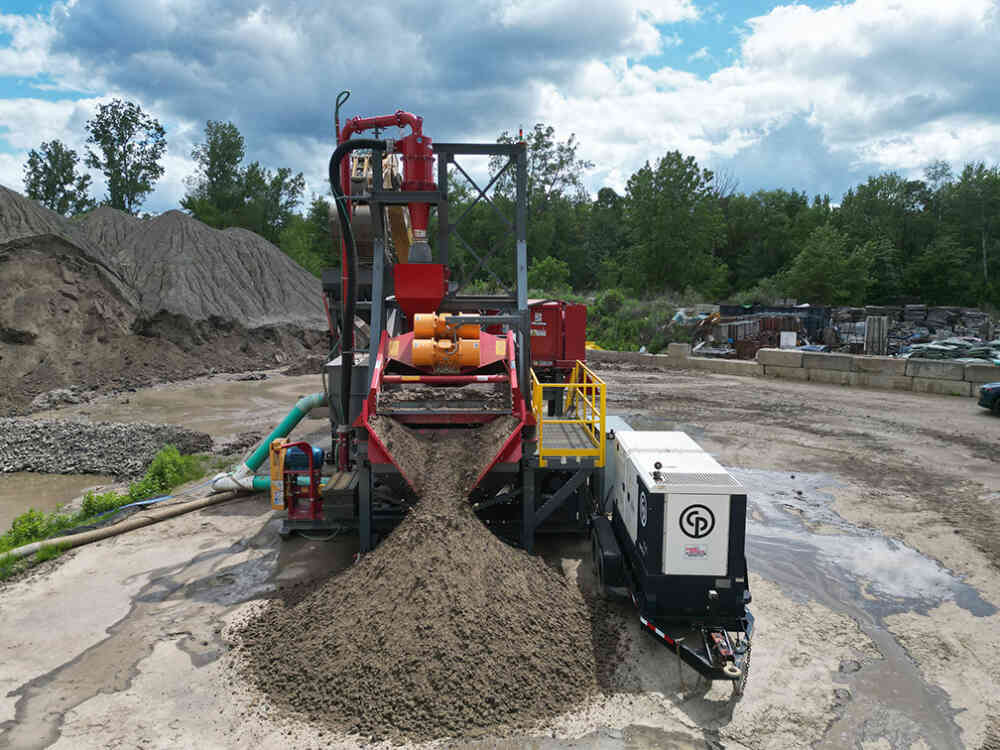
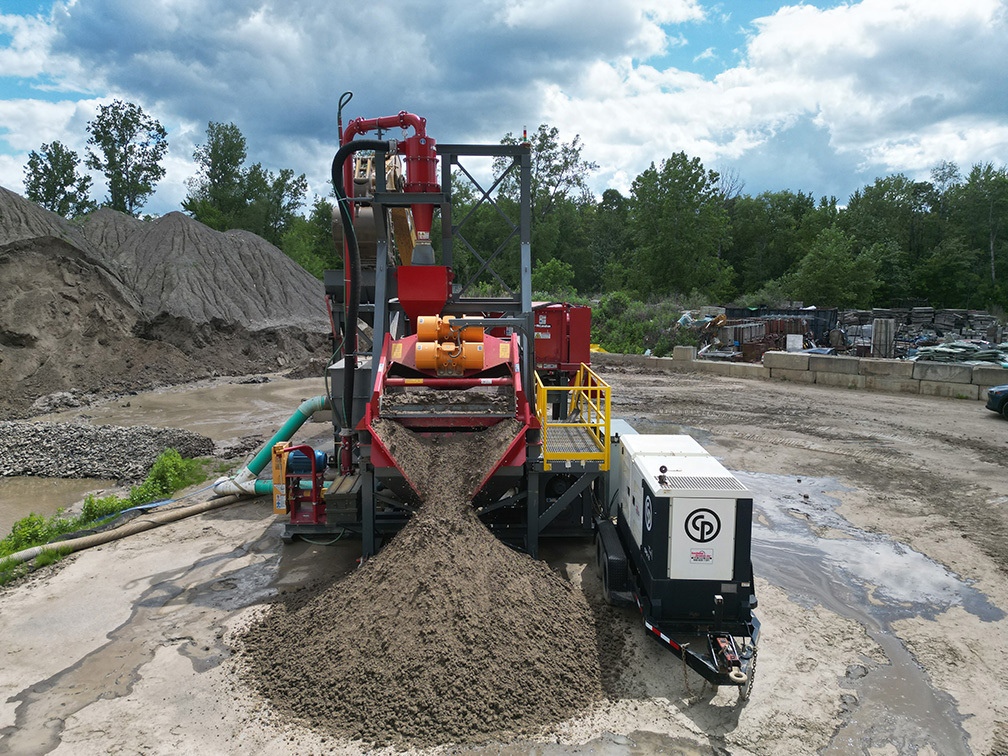
After a Cyclone or SeparatorTM washes out unwanted fines, Dewatering Screens remove excess water, creating a drip-free, washed sand-sized product.
Dewatering Screens vibrate at high frequency, allowing water to drain away while solids move toward the discharge end. The result is a drip‑free product that can be handled immediately.
Step 3: Tailings Management
The final stage of hydrovac waste processing focuses on managing and recovery of tailings.
Thickeners are a popular option for tailings management in hydrovac waste recycling. Thickeners are designed to concentrate fine solids by allowing them to settle while recovering clarified water for reuse. Through the addition of flocculants and controlled settling, these systems increase the solids concentration of the tailings stream and significantly reduce the volume of material requiring further processing. This not only improves the efficiency of downstream dewatering equipment, but also helps facilities maximize water recovery and reduce freshwater consumption. For high-volume hydrovac recycling operations, Thickeners can serve as a critical step in creating a closed-loop water management system while minimizing disposal costs.
For operations requiring further dewatering of tailings, Filter Presses are an excellent option. Filter Presses generate a compact, cake‑like material that is easy to stack, transport, or dispose of. Another option is the Decanter Centrifuge.
Dewatering performance depends on soil composition, polymer selection, retention time and moisture targets. Because of this, the right combination of equipment and chemistry is essential for optimal results.
Water recovered during separation and dewatering can often be reused for hydrovac operations. This reduces freshwater consumption and minimizes the number of water‑hauling trips required. For contractors working in areas with limited water access or strict environmental regulations, this can significantly lower operating costs.
Recovered solids may also have value. Depending on local guidelines and material quality, they can be repurposed as pondliner, construction fill or landscaping material. Even when reuse is not permitted, the reduced weight of dewatered solids still lowers disposal costs and improves operational efficiency.
This shift toward recovery aligns with broader industry goals around sustainability and responsible resource use. It also helps contractors reduce their environmental footprint while improving the economics of hydrovac work.
Traditional Disposal vs. Modern Slurry Processing
For many years, hydrovac slurry was simply hauled to a landfill in its wet state. This approach is expensive, inefficient and increasingly restricted. Wet slurry is heavy, which drives up fuel consumption and tipping fees. It also requires more trips, more labor and more time.
Modern slurry processing—built around separation, dewatering and recovery—offers a cleaner, more cost‑effective alternative. By reducing volume and producing reusable materials, contractors can lower their operating costs and meet regulatory requirements.
Choosing the Right Hydrovac Waste Disposal Strategy
Whether processing slurry on-site or at a dedicated facility, selecting the right equipment is key to achieving efficient, cost-effective results. These proven solutions help producers streamline hydrovac waste management while supporting sustainability and operational performance.