Effective manure management is a critical part of every dairy operation. Whether the goal is nutrient management, regulatory compliance, cleaner process water or improved manure handling, separating manure solids from liquid can help dairy producers optimize manure management systems and recover value from manure streams.
Two common solutions used for liquid-solid separation are Rotary Drum Separators and Slope Screens. While both machines perform the same basic function - separating manure solids from the liquid - each is designed with different operational strengths in mind. Understanding how each machine works and where they excel can help dairy producers determine which solution is best suited for their farm.
Understanding Rotary Drum Separators

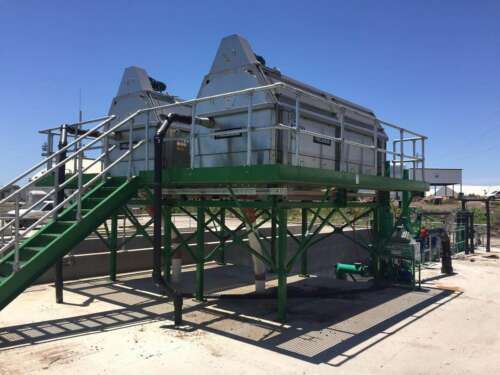
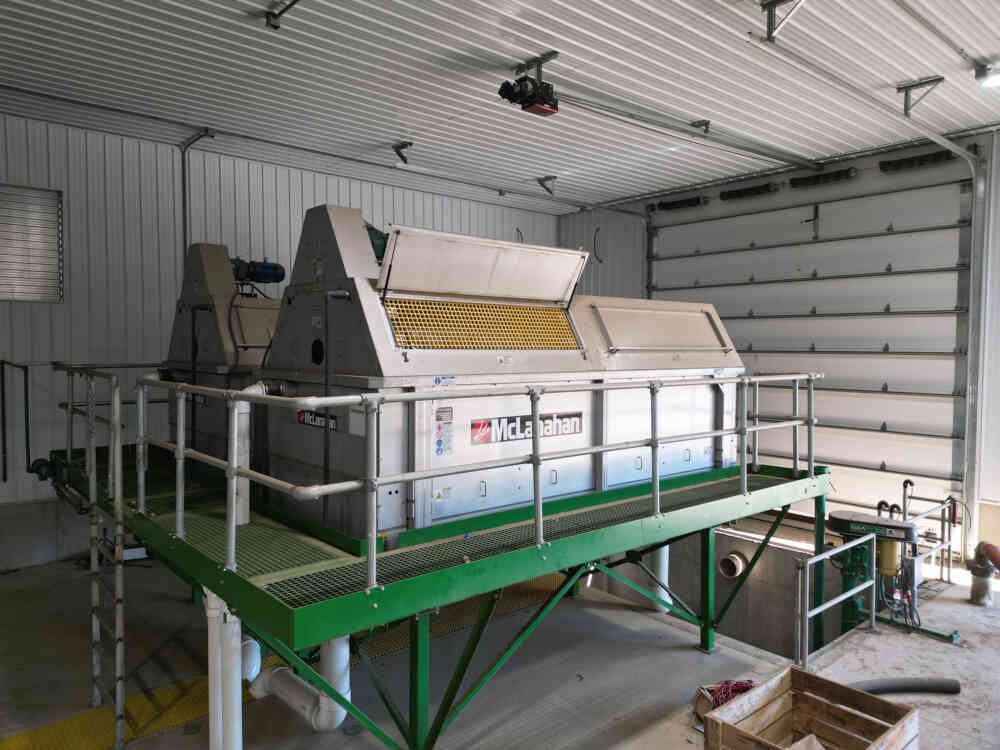
Rotary Drum Separators are mechanical liquid-solid separation systems that use a rotating cylindrical screen to separate manure into two streams: a thicker portion of concentrated manure solids, and a less concentrated liquid portion.
As manure is pumped into the drum, liquid and finer particles pass through the screen openings while larger fibers and solids remain on the screen surface. The drum's rotational movement and internal flighting continuously move material toward the opposite end of the feed end, where the dewatered material is discharged and processed further or conveyed to storage.
This technology has been widely used in dairy manure management because of its ability to remove a significant amount of manure solids and improve water quality for downstream processes.
Benefits of Rotary Drum Separators
Rotary Drum Separators are often selected when removing manure solids and cleaning up process water are key objectives.
Key advantages include:
- Effective manure solids separation
- Improved process water quality for sand separation systems, flush flumes and land applications
- Multiple screen size openings to tailor performance to operational goals
- Capability to recover manure solids for bedding or composting
- Automated clean-in-place system that helps maintain performance
- Fully enclosed design for cleaner and safer operation
- Compatibility with Roll Press technology for additional manure solids dewatering
Understanding Slope Screens
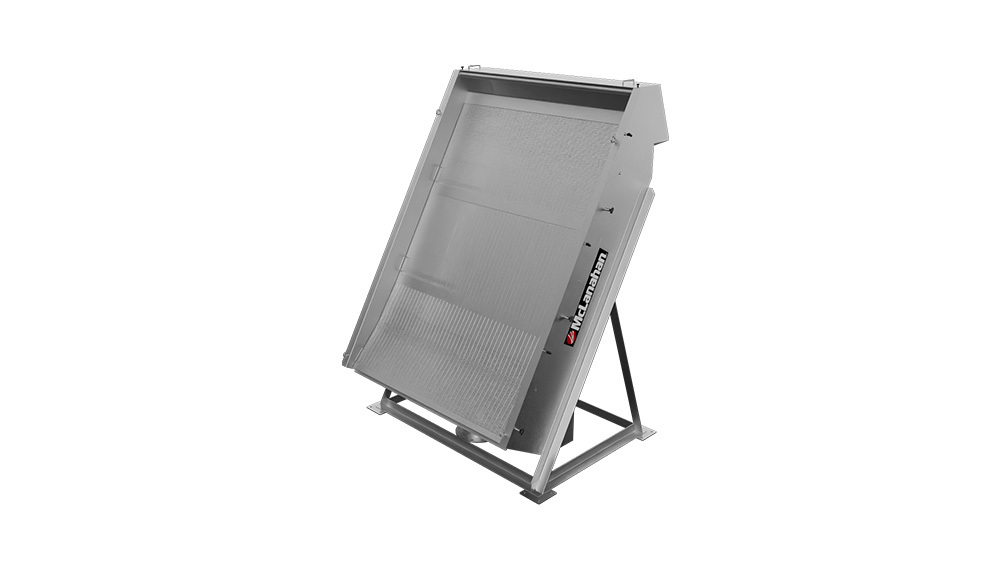
Slope Screens provide a different approach to manure separation. Rather than relying on mechanical movement, they utilize gravity and wedge wire screen media to separate manure solids from liquid streams.
Manure is distributed across the top of the screen and flows downward over the screen surface. As the material moves across the wedge wire panels, liquid passes through the openings while solids remain on the screen and move toward a collection area.
Because static Slope Screens contain no moving parts, they offer a simple and dependable solution for liquid-solid separation.
Benefits of Slope Screens
Slope Screens are particularly well-suited for handling dilute manure streams and high process volumes.
Key advantages include:
- No moving parts
- Lower maintenance requirements
- Reduced operating costs
- High processing rates for dilute manure applications
- Easy access for cleaning and maintenance
- Flexible installation in new or existing manure management systems
- Compatibility with Roll Press technology for additional manure solids dewatering
Their simple design eliminates many of the components that typically require routine maintenance, such as motors, belts, bearings and rotating assemblies. As a result, dairy producers often choose Slope Screens when minimizing maintenance and maximizing uptime are top priorities.
Rotary Drum Separator vs. Slope Screen: Key Differences
Although both technologies separate solids from manure, their design and ideal applications differ.
Manure Characteristics
One of the most important considerations is the consistency of the manure stream.
Rotary Drum Separators are often chosen when dairy producers are looking to maximize solids capture and produce cleaner process water. The rotating screen and dewatering action make them effective for operations focused on removing as much material as possible from the liquid stream.
Slope Screens, on the other hand, are specifically designed for dilute manure streams. They perform particularly well when large volumes of relatively dilute manure need to be processed efficiently.
Processing Capacity
For operations handling high flow rates, Slope Screens offer a significant advantage. Their static design can accommodate large process volumes, and multiple units can be installed to increase capacity when needed.
Rotary Drum Separators also provide substantial processing capacity, but flow rates are influenced by screen selection and manure characteristics.
Maintenance Requirements
Maintenance expectations can vary significantly between the two products.
Rotary Drum Separators utilize rotating equipment, including motors, drive systems and bearings. While modern designs incorporate features that simplify maintenance and improve reliability, routine attention to mechanical components is still required.
Slope Screens have no moving parts, reducing maintenance requirements considerably. Routine cleaning of screen panels remains necessary, but overall maintenance demands are often lower. The McLanahan Slope Screen features three individual screen sections that can be flipped up for cleaning, allowing access to the underside of the panels without fully removing them. The individual screen sections can also be fully removed and replaced with ease.
Solids Capture and Water Quality
If improving process water quality is a primary objective, Rotary Drum Separators are the preferred choice. The ability of a Rotary Drum Separator to capture fibers and suspended solids can help create cleaner water for reuse applications such as sand separation systems and flush flumes.
Slope Screens effectively remove solids from dilute streams but are often selected primarily for their simplicity and high-capacity processing capabilities rather than maximum solids recovery.
When Should a Dairy Choose a Rotary Drum Separator?
A Rotary Drum Separator may be the best choice when:
- Maximizing solids recovery is a priority
- Cleaner process water is required
- Fiber recovery for bedding or composting is desired
- Manure will feed into nutrient recovery or separation systems
- Water quality improvements are needed for sand separation or flush systems
- Dairy producers want flexibility through various screen size options
For example, a dairy focused on recovering manure fibers while improving process water quality for reuse may benefit from the Rotary Drum Separator and the enhanced solids capture capabilities.
When Should a Dairy Choose a Slope Screen?
A Slope Screen may be the better solution when:
- The manure stream is relatively dilute
- High manure processing rates are required
- Maintenance resources are limited
- Simplicity and reliability are major priorities
For example, a large dairy processing high volumes of dilute manure may prioritize the Slope Screen's ability to handle substantial flows while minimizing maintenance demands.
Can Rotary Drums and Slope Screens Work Together?
While a Rotary Drum Separator and a Slope Screen can work together, one is usually chosen as the primary separator.
The right selection depends on factors such as manure characteristics, bedding type, flow rates, water reuse goals and nutrient management objectives.
Choosing the Right Solution
There is no universal answer when it comes to manure separation. The best solution depends on the unique needs of each dairy operation.
Rotary Drum Separators are often the preferred option when dairy producers need enhanced solids capture, cleaner process water and greater flexibility in separation performance. Slope Screens offer a straightforward, low-maintenance solution capable of processing high volumes of dilute manure with reliable results.
By evaluating manure characteristics, operational goals and long-term maintenance expectations, dairy producers can select the separation technology that delivers the greatest value and performance for their operation.
Not sure which manure separator is right for your dairy? Contact the McLanahan team to evaluate your manure management system and identify the solution that best fits your operational goals.