Bucket Wheels
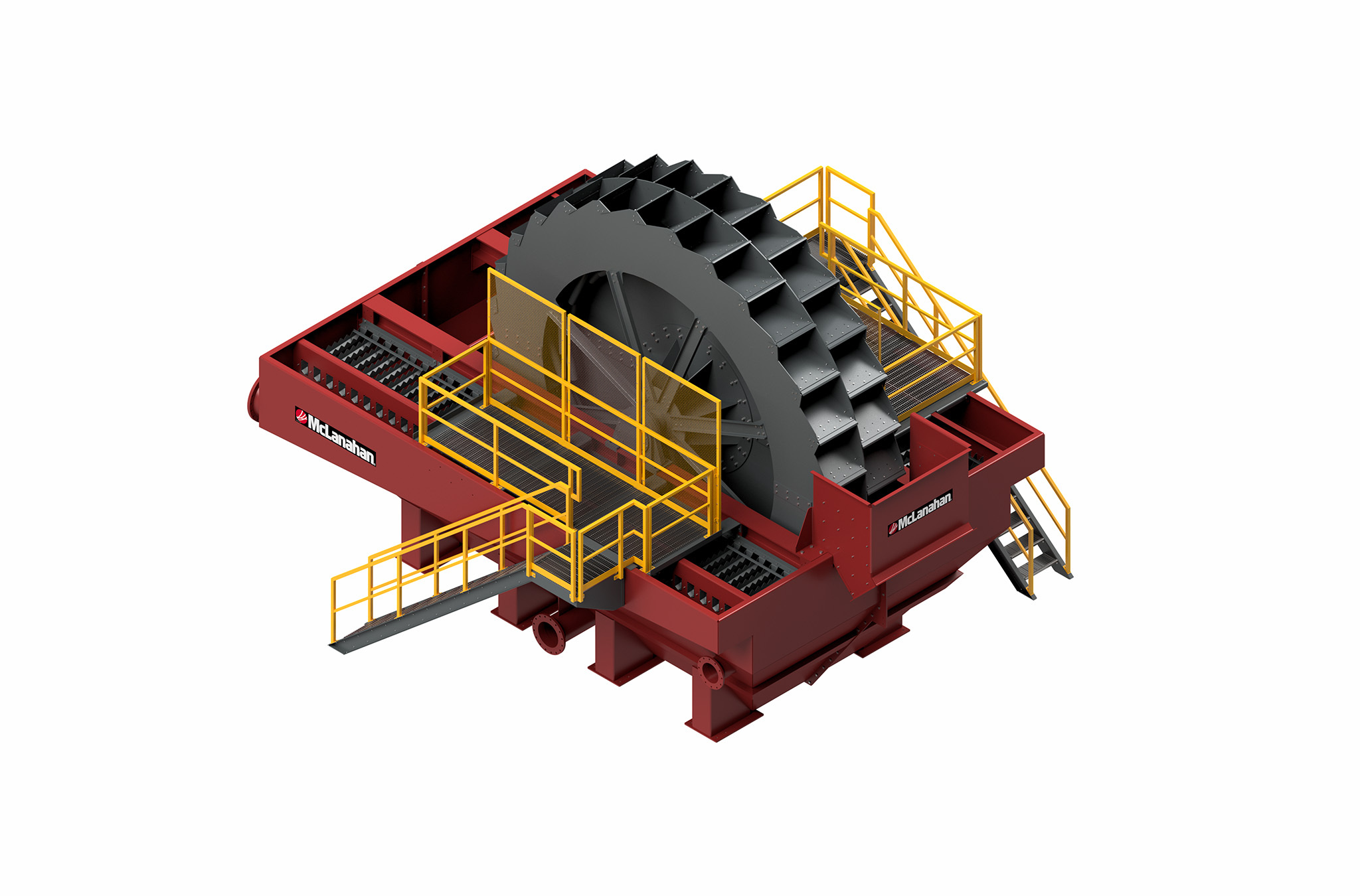
The McLanahan Bucket Wheel is a large rotating mechanical device equipped with scooping buckets for dewatering sand slurries containing high water volumes, particularly in dredging applications.
Applications
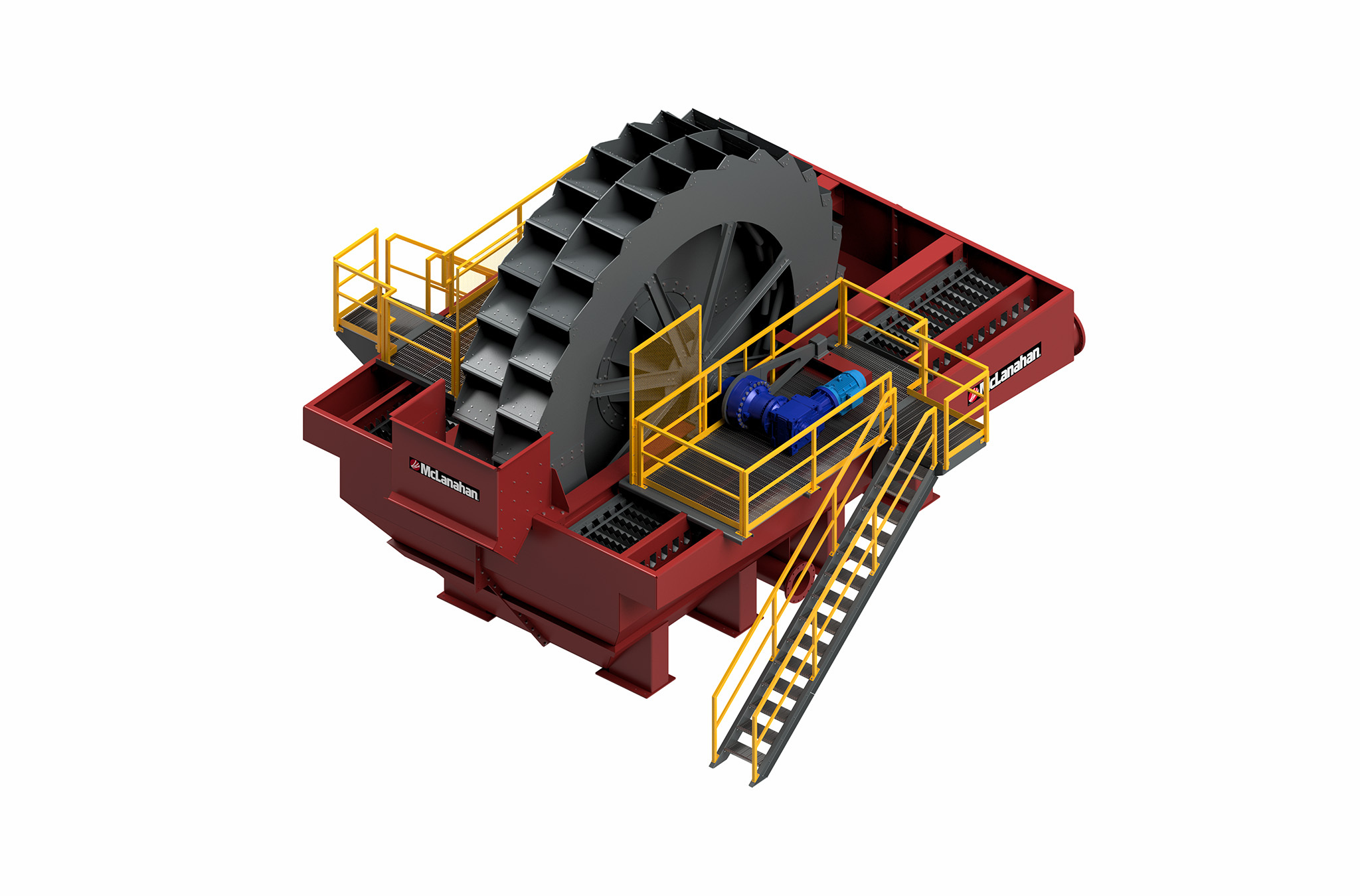


The McLanahan Bucket Wheel is a large rotating mechanical device equipped with scooping buckets for dewatering sand slurries containing high water volumes, particularly in dredging applications.
Applications
Jump To:
Bucket Wheels are ideal for dredging applications because they can accept high water volumes and offer flexibility for fluctuating feeds. However, they can be used in any sand, gravel and frac sand operation where water coming in with the feed can be a challenge to manage.
Primarily a dewatering device, Bucket Wheels also act as a simple, cost-effective free-settling classifier, where the buckets are the mechanisms for removing product-sized solids. Bucket Wheels operate with minimal horsepower and offer high capacities for efficient dewatering.
The Bucket Wheel has a tank-like structure that features a rotating wheel fitted with dewatering buckets. These dewatering buckets have a cutter on the edge to capture settled solids from the bottom of the tank. The buckets are lined with media with small openings that retain solids but allow the water to drain as the wheel rotates. The wheels rotate slowly, typically 0.4-1.6 rpm, to allow time for water to drain through the openings. The water is transferred through siphon tubes at the rear of each bucket and directed back into the tank. The dewatered material is then discharged on the opposite side of the tank and is conveyable and stackable. If further dewatering is required for the application, a Dewatering Screen can be placed directly after the Bucket Wheel to produce a drip-free material.
Bucket Wheels can handle fine to medium-sized solids (approximately 1” minus), so it is recommended a scalping screen be placed ahead of them to remove oversize material. Free-settling classification occurs when the sand slurry enters the Bucket Wheel and the larger, heavier solids sink to the bottom of the tank. A baffle plate in the feed area helps keep turbulence to a minimum by directing material away from the settling area. Water and the ultra-fine solids that do not settle flow over weirs at the top of the tank and are directed to waste or additional processing equipment. Optional rising current can be added to improve classification by helping keep ultra-fine solids in suspension.
McLanahan is the only manufacturer to offer a full range of equipment for handling any water volume present in a slurry feed. This equipment line includes:
With this full range, McLanahan is able to provide the best solution for each site, ensuring optimal performance, efficiency and reliability across a wide range of applications.
McLanahan’s Bucket Wheel is designed from decades of processing knowledge and field experience. Available in single and double units, McLanahan Bucket Wheels can handle up to 11,000 GPM (2,500 m3/hr) of slurry with a solids capacity of up to 1,060 STPH. They operate at low horsepower and are driven by one motor and gearbox, which allows a smaller footprint. They also feature an enhanced rising current water system for improved classification.
McLanahan Bucket Wheels can be paired with the company’s other equipment to create an entire wet processing system.
Bucket Wheels are selected by matching the machine’s volumetric capacity, drainage time and settling area to a site’s production requirements, including desired capacity, characteristics of the feed material and maximum particle size in the feed.
Key sizing information to supply to the manufacturer includes:
McLanahan offers a range of Bucket Wheel sizes, in single and double bucket units, to meet many applications requirements.
McLanahan Buckets Wheels are ideal for dewatering high-volume slurries. The wheels rotate slowly to allow as much moisture as possible to drain from the material before discharge. The discharged product can contain up to 25% moisture but can be lower depending on the application. The dewatered material as it leaves the Bucket Wheel is conveyable and stackable.
If further moisture removal is necessary, sites can consider adding a Dewatering Screen following the Bucket Wheel to achieve a product with a drip-free consistency.
Bucket Wheels can typically recover material down to 200 mesh (75 micron). The Bucket Wheel can be adjusted to capture or remove more fines, depending on the application or if application requirements change. Slowing down the rotation of the wheel may allow for the removal of more fines, since the material has longer time to drain (fines follow the water). However, slowing down the wheel reduces capacity. Conversely, speeding up the rotation of the wheel can retain more fine material and increase capacity. Lowering the overflow weirs allows more material to report to waste, creating a coarser cut, while raising the weirs allows finer particles time to settle and be scooped up by the dewatering buckets. Optional rising current can also help improve classification by keeping fine particles in suspension so they overflow to waste.
McLanahan Bucket Wheels are highly effective, high-capacity, low-cost and low-horsepower mechanisms for dewatering high water volume sand slurries.