Greenwood Farms Recycles 100% of Hydrovac Waste with McLanahan System
Case Studies
Greenwood Farms, located in Albany, N.Y., produces green waste material by recycling compost to make topsoil. The company also recycles heavy highway products and hydrovac slurries, turning them into usable products.
“We’re a full 100% recycling facility,” said Greenwood Farms Vice President Ulderic “U.B.” Boisvert. “Everything that comes in gets recycled and resold.”
Challenge
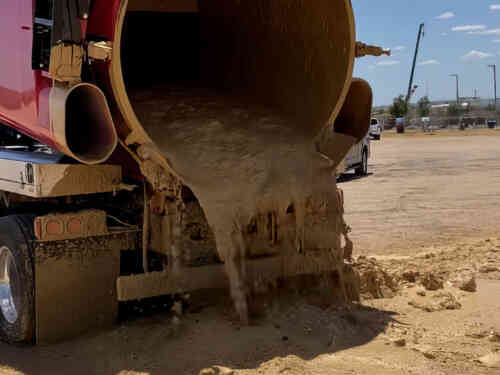
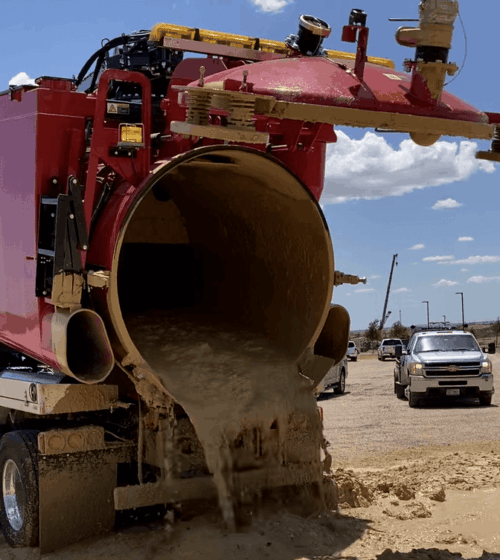
Hydrovac excavation started gaining traction in New York a few years ago as a way to dig utility lines or telephone poles without harming the fiber optic cables already in the ground. Also called “soft digging”, hydrovac excavation uses high-pressure water to break up dirt, creating a slurry that is then sucked into a hydrovac truck via vacuum.
“They have to put a lot of water to it, obviously, to suck the material out,” said Boisvert, “so the material comes to you, it’s a very, very wet consistency.”
The amount of liquid in the slurry often prevents disposal at traditional landfills; only certain facilities are permitted to accept hydrovac waste. Greenwood Farms is one of these facilities.
As hydrovac waste is composed of aggregate material (dirt, sand, rock, etc.) and water, it can be recycled and put back into market instead of back in the ground. However, Greenwood Farms struggled with dewatering the “sloppy mess,” as Boisvert called the hydrovac slurry.
“We found it was a problem because you can’t dewater the product fast enough to make a usable product,” Boisvert explained. “It just runs all over. It’s really, really a tough material to work with.”
Solution
A representative from Baschmann Services, McLanahan’s dealer in New York, visited Greenwood Farms to check in on some Anaconda tracked equipment operating there and saw Boisvert struggling with the hydrovac waste material. Boisvert said the dealer recommended he reach out to McLanahan for a mechanical dewatering solution.
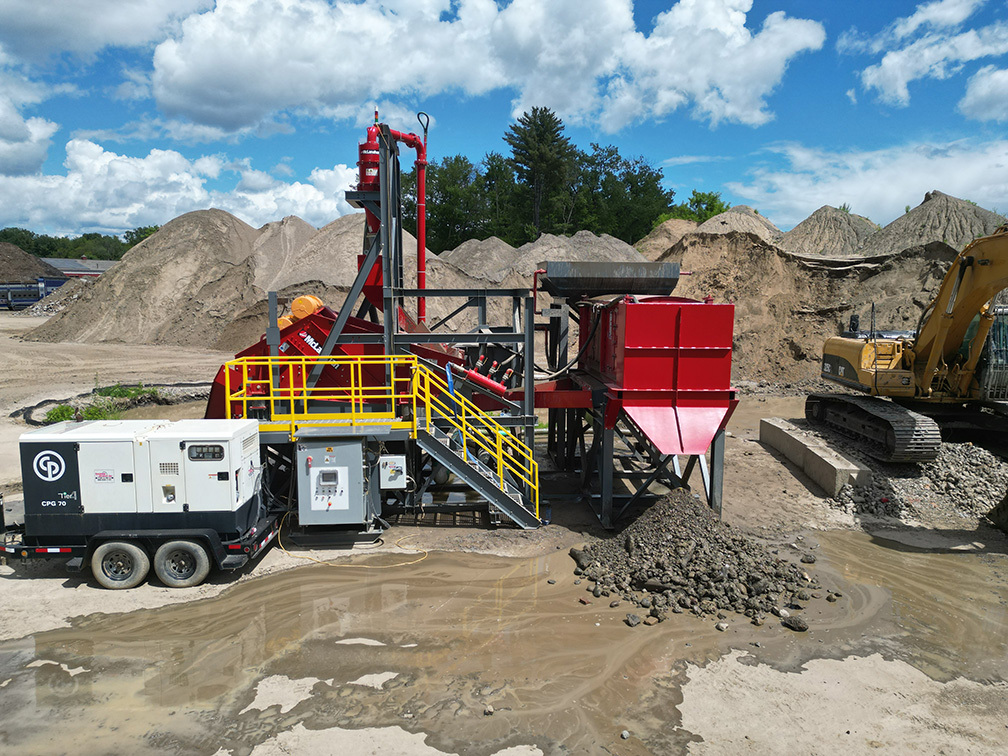
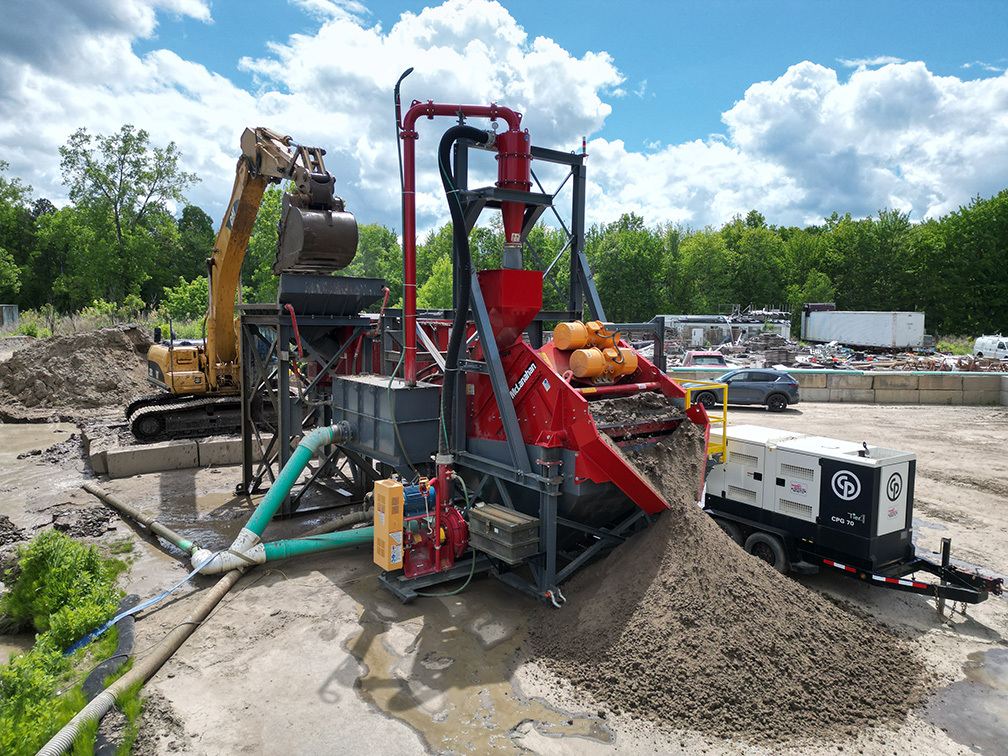
Boisvert did, and McLanahan designed an excavator-fed Hydrovac Waste Recycling System for Greenwood Farms that features a Trommel Screen, sump, Pump, SeparatorTM and Dewatering Screen. The system fits in a compact footprint, which is perfect for Greenwood Farms’s 10-acre site.
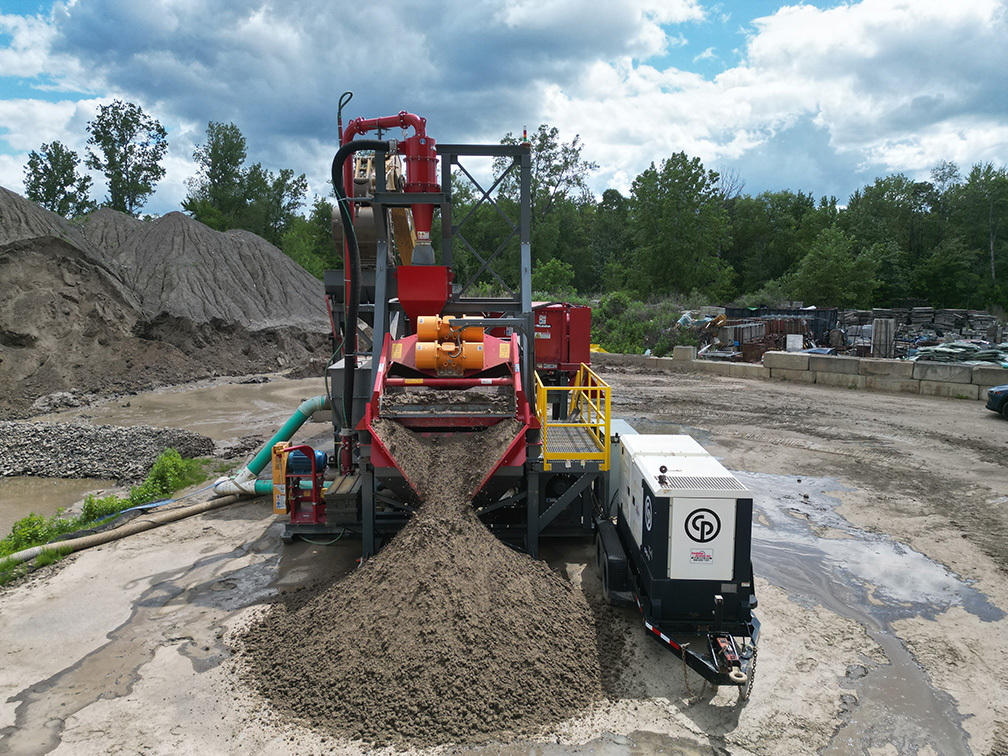
The hydrovac waste slurry enters the hopper ahead of the Trommel Screen, where spray bars give the material an initial rinse. The Trommel Screen is essentially a rotating drum fitted with 5 mm punch plate that separates the larger material from the sand. As the drum rotates, the larger rock and other debris pass through the drum for discharge out the other end, while the sand and water pass through holes in the punch plate and are directed to the sump. A Slurry Pump transfers the sand slurry from the sump to the SeparatorTM, where silts, clays and other fine material are removed. The larger sand particles are discharged onto a Dewatering Screen to remove excess moisture ahead of stockpiling.
“And there’s the finished product, right there,” Boisvert said, referencing the pile of drip-free sand at the bottom of the Dewatering Screen discharge chute. “As they say, the proof is in the pudding.”
Results
With the McLanahan Hydrovac Waste Recycling System, Greenwood Farms is able to dewater hydrovac slurry and separate it into two salable products. The larger aggregate gets crushed into a recycled concrete material, and the sand is mixed in with the topsoil to create a loam product. Adjusting the SeparatorTM allows for more of the silt to be removed to create a bedding sand or septic sand.
“We’re using everything. Everything you see here gets reused, everything,” Boisvert said.
The McLanahan Hydrovac Waste Recycling System handles about eight to 10 hydrovac truckloads a day for Greenwood Farms and produces 75-100 tons per hour of sand alone. Boisvert said the system has been a benefit for his business.
“I think this machine fills a niche,” said Boisvert. “We’re able to open it up to more hydrovac trucks, where before I was pushing them away because I had no way to mitigate it.”
Being able to accept more hydrovac trucks on site is more money for Greenwood Farms, which charges a tipping fee for dumping the material on site in addition to selling the recovered aggregate product. More trucks also means more material that can be recovered and sold.
Boisvert’s favorite thing about the McLanahan Hydrovac Waste Recycling System is seeing the wet slurry transformed into rock and dewatered sand.
“It’s pretty amazing to see what McLanahan has done with this machine,” he shared. “To put [hydrovac waste slurry] into it and, then literally seconds later, it comes out the other end dry, it’s really remarkable.”