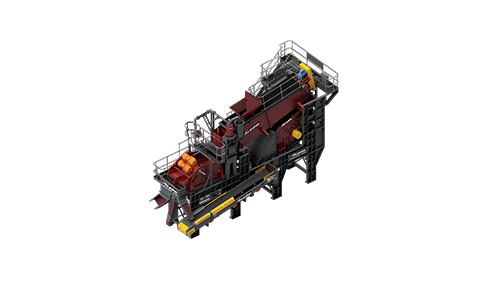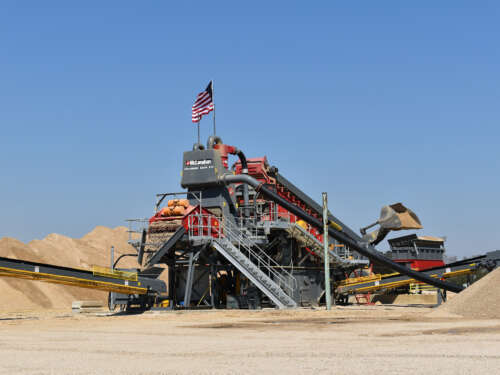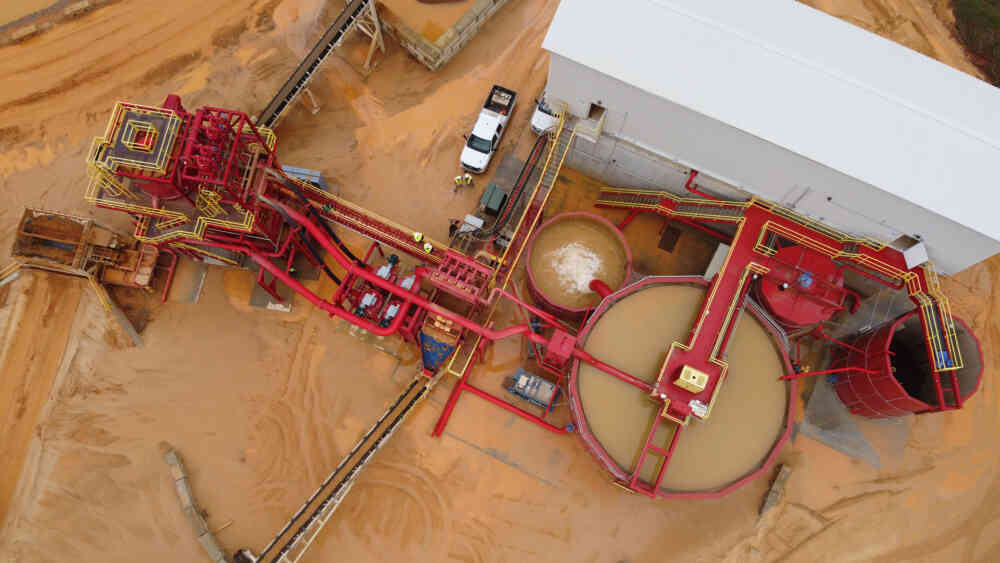
Closed-loop wash plants are quickly becoming the standard for mineral and aggregate producers looking to reduce water consumption, cut operating costs and meet strict environmental regulations. Instead of sending used process water to settling ponds or off-site disposal, a closed-loop system captures, cleans and recycles that water back into the plant, allowing producers to recover and reuse up to 95% of their process water, depending on the application and system configuration.
For operations facing water shortages, limited permitting or high disposal costs, the shift toward closed-loop systems isn’t just a sustainability decision; it can also provide significant operational and economic advantages.
What Is a Closed-Loop Wash Plant?
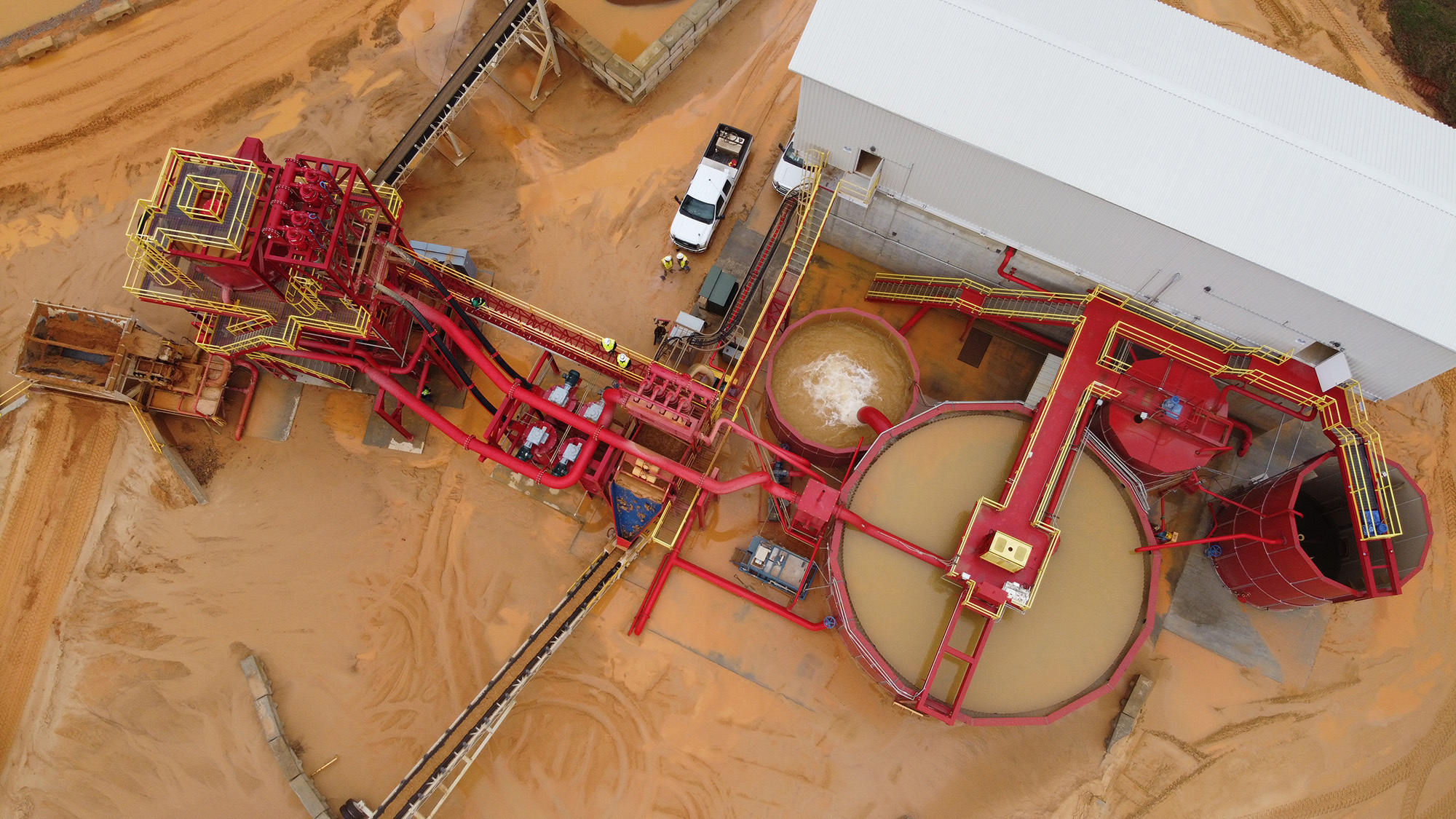
A closed-loop wash plant is a circular system designed to capture, clean and reuse process water within the same operation. Instead of relying on large settling ponds or constant freshwater intake, the plant uses a series of mechanical and chemical processes to remove solids, clarify water and return it to the washing circuit.
By integrating water treatment and recycling equipment into the wash plant, producers can continuously recover and reuse process water while effectively managing fines and solids. The result is a highly efficient system that minimizes water loss and reduces environmental impact.
Why Producers Invest in Closed-Loop Wash Plants
Producers implement closed-loop wash plants for a variety of operational, environmental and economic reasons, including:
- Limited water availability
- Restrictions on freshwater withdrawal
- Rising water disposal costs
- Valuable resources locked beneath settling ponds
- Limited space for settling ponds
- Tailings management requirements
- Environmental permitting considerations
Closed-loop systems offer a practical way to reduce waste and maintain efficient plant operation while meeting environmental and site-specific requirements.
Key Equipment for Closed-Loop Water Recycling
A closed-loop wash plant relies on several pieces of equipment working together to recover, clean and reuse process water. While each component serves a specific function, they are often integrated into a complete system that maximizes water recovery, improves material classification and reduces waste. The following technologies play a key role in helping aggregate and mining operations achieve efficient water management and improve overall plant performance.
Hydrocyclones
Hydrocyclones, also referred to as cyclones or Separators™, use centrifugal force to separate fine particles from water. As slurry enters the Hydrocyclone, the coarser solids are forced outward and discharged through the underflow while the remaining water and fine particles exit through the overflow.
Hydrocyclones are used in material processing to classify and recover sand, reducing the volume of solids entering downstream processing equipment. This not only improves the performance of other water management equipment but also helps producers recover more sellable material that might otherwise be lost to waste.
Thickeners
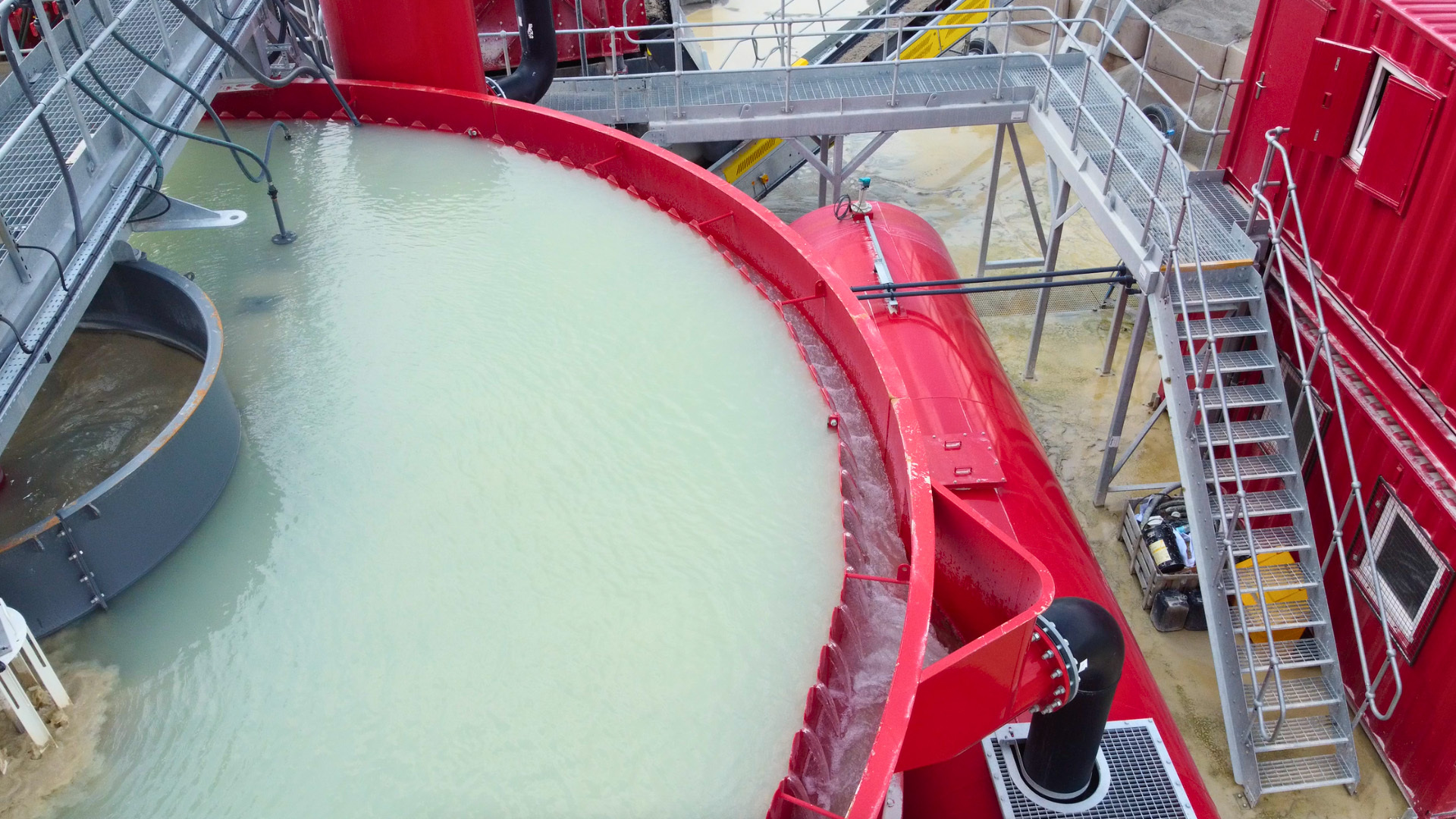
Commonly used in mining and aggregate applications, Thickeners (also known as clarifiers) are designed to separate suspended solids from water in a slurry. Utilizing minimal amounts of flocculant, fine particles settle to the bottom of the tank while clarified water rises to the top of the tank and overflows out a weir. The clear process water recovered from Thickeners can be immediately recycled back into the plant for reuse, reducing the need for fresh water and supporting a more sustainable operation.
The Thickener is often considered the central component of a closed-loop water system because it performs the primary water clarification function. Proper selection of settling area, feedwell design and flocculant dosing are critical to maximizing water recovery and maintaining stable operation.
Depending on site conditions and material characteristics, Thickeners can help producers recover up to 90% of their water for reuse. Whether the goal is maximizing water recovery, recovering valuable fines or both, Thickeners are an effective solution for improving plant efficiency, reducing water consumption and reducing operating costs.
Filter Presses
Filter Presses are used to dewater and separate liquids and solids in a thickened slurry. By applying pressure to force the slurry through a series of filter cloths, the suspended solids in the slurry become trapped and form cakes between the Filter Press plates.
The process creates dewatered filter cakes that are easier to handle and transport while recovering the process water for reuse in the wash plant. Filter Presses can significantly reduce the size and number of settling ponds required and, in many applications, allow operations to eliminate ponds altogether.
Dewatering Screens
Dewatering Screens remove excess moisture from washed aggregates and recovered sand products. By reducing moisture content, these screens help produce a drip-free, stackable material while decreasing the amount of water lost with the final product.
Pumps and Sumps
Pumps and sumps move water, slurry and settled solids throughout the closed-loop system. They ensure efficient transfer between washing, classification, thickening and dewatering stages while maintaining consistent plant performance.
How Closed-Loop Systems Conserve Water
Closed-loop wash plants conserve water by capturing and recycling process water throughout the washing operation. Rather than sending water to settling ponds or discharging it as waste, a closed-loop system collects water used during washing, screening and classification and directs it through a series of treatment stages.
Equipment such as Hydrocyclones, Thickeners and Filter Presses remove suspended solids and fine particles, producing clean, clarified water that can be reused without affecting product quality or causing excessive wear on pumps and other equipment.
Effective water clarification is essential to maintaining plant performance. Reusing poorly clarified water can reduce washing efficiency, accelerate equipment wear and impact final product quality.
Once treated, the clarified water is returned directly to the wash plant and reused in the process, creating a continuous cycle that significantly reduces freshwater consumption. Depending on the application and equipment configuration, producers can recover and reuse up to 95% of their process water.
Environmental and Operational Benefits
While conserving water is often the main objective, closed-loop wash plants offer a range of significant environmental, operational and economic benefits. By recycling process water, producers can dramatically reduce their dependence on freshwater sources, helping to lower operating costs and mitigate the risks associated with water shortages and restrictions. Closed-loop systems also minimize or eliminate the need for large settling ponds, freeing up valuable site space and reducing maintenance requirements, such as pond cleaning.
By reducing reliance on settling ponds and improving tailings dewatering, closed-loop systems can simplify site management, reduce long-term environmental liabilities and improve operational safety.
From an environmental perspective, reduced water intake and wastewater discharge help lower the overall environmental footprint of an operation while supporting regulatory compliance. Additionally, a smaller site footprint can simplify permitting and provide greater flexibility for plant expansion. For operations located in drought-prone or water-restricted regions, closed-loop systems offer a reliable solution for maintaining production while making the most of the available water resources.
Closed-loop systems also support a circular economy by keeping valuable resources in use rather than treating them as waste. Instead of consuming large volumes of fresh water and disposing of wastewater and fines, producers can recover, recycle and reuse these materials within their operation. This reduces resource consumption, minimizes waste generation and helps create a more sustainable and efficient production process.